
As delivery technology becomes more important in the nutraceutical industry, traditional liposome applications are beginning to evolve. Early liposomal formulations were mainly designed to improve the stability and absorption of single active ingredients, particularly fat-soluble compounds such as CoQ10 and vitamin D. Technologies such as liposomal encapsulation technology helped address some long-standing challenges related to ingredient degradation and limited bioavailability.
However, the direction of product development in the supplement market is changing. Many new formulations are no longer designed around a single nutrient. Instead, brands are increasingly focusing on system-level health support, such as cellular energy metabolism, healthy aging, and cognitive performance. These goals typically require multiple active compounds working together, which creates new challenges for conventional delivery systems.
This shift is one of the reasons why liposomal co-delivery is gaining attention across the industry. Rather than delivering a single compound, the concept focuses on transporting multiple active ingredients through the same delivery system in a stable and efficient way.
In this context, co-loading liposome technology is emerging as a promising direction. Unlike simply mixing several ingredients together, co-loading liposomes are designed so that both hydrophilic and lipophilic compounds can exist within the same liposomal structure. Through careful formulation design, these ingredients can be delivered together and released in a coordinated manner.
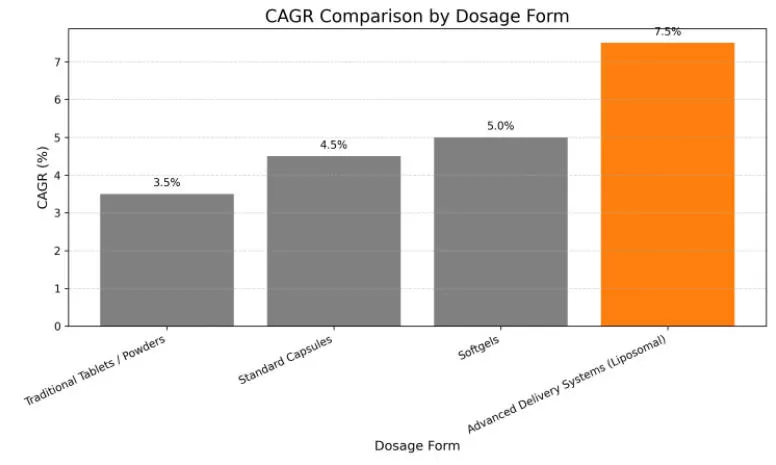
Source: MarketsandMarkets; Business Research Insights; Nutrition Business Journal (NBJ)
From a formulation perspective, this approach offers several key advantages:
Co-delivery and synchronized release of multiple active ingredients
Improved stability, helping protect sensitive compounds during digestion
Enhanced bioavailability, allowing nutrients to be utilized more efficiently
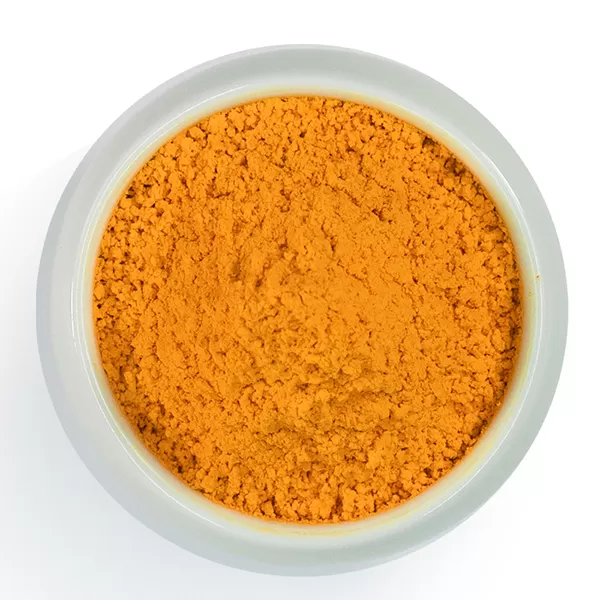
These advantages are particularly valuable in complex functional formulations where ingredient synergy is important. For example, compounds commonly used in metabolic and antioxidant support—such as liposome curcumin or liposome CoQ10—may benefit from advanced liposomal delivery strategies.
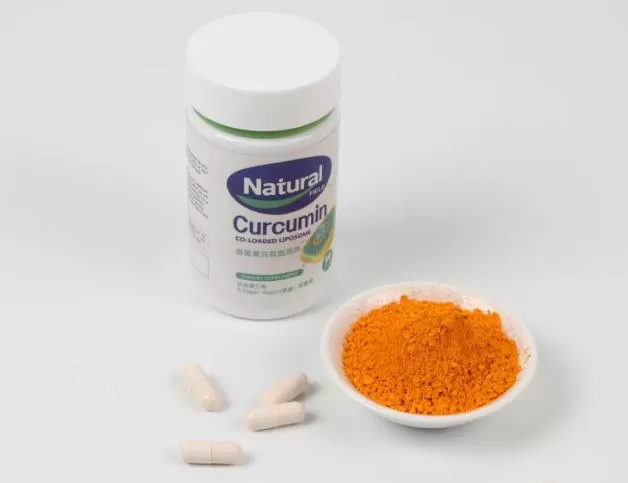
Building on this concept, Natural Field has developed the NF Co-Loading Liposome® platform, which focuses on multi-ingredient liposomal delivery. Based on this platform, the company has introduced several innovative liposomal ingredients, including co-loaded liposomal curcumin and co-loaded liposomal CoQ10 designed for modern functional food formulations.
In addition to liquid systems, the industry is also exploring stable liposomal powder formats, which provide greater flexibility for supplement manufacturers working with capsules, sachets, or functional beverages. As a result, demand for experienced liposomal manufacturers and specialized liposome manufacturing companies has grown rapidly.
Today, many brands looking to incorporate advanced delivery systems are working with a liposomal contract manufacturer or partners experienced in liposomal contract manufacturing. This allows them to access advanced technologies such as natural liposomes and complex co-delivery systems without building their own production infrastructure.
As the nutraceutical industry continues to move into what many describe as the “delivery efficiency era,” liposomes are no longer seen only as carriers for individual ingredients. Instead, they are increasingly becoming an integral part of formulation design.
At events such as Food Ingredients China 2026 (FIC 2026), discussions around delivery technology and multi-ingredient liposomal systems are expected to draw significant attention—reflecting a broader industry shift toward more advanced and effective nutrient delivery solutions.

Professor and Ph.D. Supervisor, School of Pharmaceutical Sciences, Southern Medical University. Head of the Functional Ingredient R&D Center, Natural Field. Professor Chong Li is a distinguished researcher in the field of advanced drug delivery systems and pharmaceutical technology innovation.
 EN
EN
 es
es  jp
jp  ko
ko  fr
fr  de
de  it
it  ru
ru  pt
pt  th
th  ar
ar  ms
ms