
Liposomes have been studied for more than half a century and are now widely recognized as an advanced liposomal delivery system. They were first described in the 1960s by British researcher Alec D. Bangham during investigations into phospholipid behavior. Structurally, liposomes are microscopic spherical vesicles composed of one or more phospholipid bilayers. Significant progress in liposomal technology was achieved in the late 1990s, when liposomes began to be commercialized for pharmaceutical drug delivery.
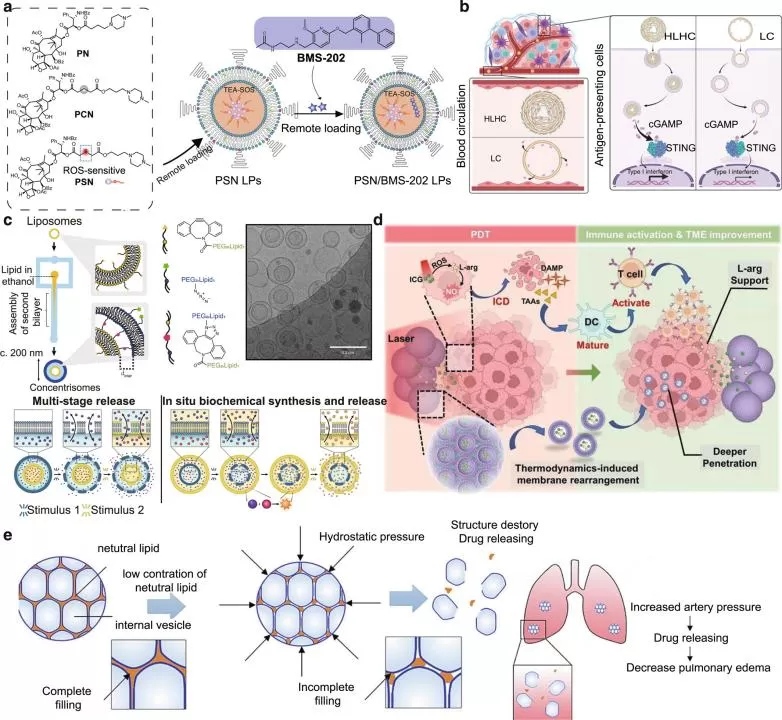
The preparation of liposomes typically starts with dissolving phospholipids in an organic solvent, followed by solvent removal and hydration in an aqueous phase. To form stable vesicles, different dispersion techniques are applied, including mechanical dispersion, solvent-based methods, and detergent removal. Commonly used approaches such as sonication, membrane extrusion, French pressure cell extrusion, and freeze–thaw cycles are essential for controlling particle size and improving the performance of liposomal formulations.
The properties of liposomes vary depending on lipid composition, surface charge, vesicle size, and preparation method. Comprehensive evaluation of liposomal delivery systems usually includes particle size distribution, morphology, membrane stability, bilayer fluidity, and encapsulation efficiency. Among these parameters, encapsulation capacity plays a critical role in determining the effectiveness of liposomal ingredients in real-world applications.
Liposomes are widely used as biocompatible and non-toxic carriers for both hydrophilic and hydrophobic active compounds. Through liposomal encapsulation, sensitive ingredients such as antioxidants, anti-inflammatory agents, antimicrobial compounds, and anti-cancer actives can be protected from degradation. This delivery approach enhances bioavailability, improves stability, and allows more efficient transport of actives to target sites.
With continuous development in liposomal technology, modern liposomes can be engineered as smart delivery platforms. Structural optimization and surface modification help improve biodistribution, prolong circulation time, enhance compound stability, and reduce systemic toxicity. These advantages make liposomal delivery systems increasingly important in pharmaceutical, nutraceutical, cosmetic, and functional food formulations.
From early laboratory discovery to modern industrial applications, liposomes have evolved into a versatile and reliable delivery solution. Thanks to their safety, adaptability, and ability to carry diverse active ingredients, liposomal delivery systems are now widely applied across pharmaceutical, cosmetic, nutraceutical, and food industries.
References
D.D. Lasic
Novel applications of liposomes
Trends Biotechnol(1998)
V.K. Sharma et al.
A historical perspective of liposomes-a bio nanomaterial
Mater Today Proc(2021)
L. Zhao et al.
Food Res Int(2015)
H.M. Kieler-Ferguson et al.
Eur J Pharm Sci(2017)
K. Kono
Thermosensitive polymer-modified liposomes
Adv Drug Deliv Rev(2001)
E. Yuba et al.
Biomaterials(2010)
H. Takeuchi et al.
J Control Release(2000)
H.C. Loughrey et al.
Optimized procedures for the coupling of proteins to liposomes
J Immunol Methods(1990)
A.N. Lukyanov et al.
J Control Release(2004)
C.K. Song et al.
Disaccharide-modified liposomes and their in vitro intracellular uptake
Int J Pharm(2009)
 EN
EN
 es
es  jp
jp  ko
ko  fr
fr  de
de  it
it  ru
ru  pt
pt  th
th  ar
ar  ms
ms