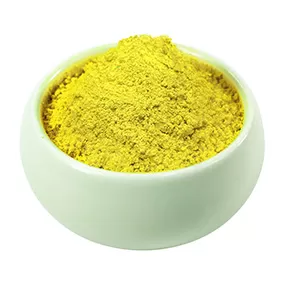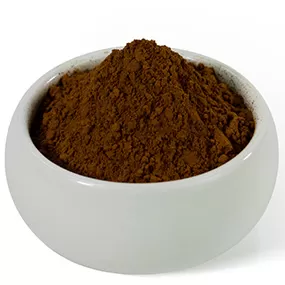

The abnormal activation of SASP (Senescence-Associated Secretory Phenotype) leads to the accumulation of senescent cells in the body, and senescent cell scavengers are a key approach to addressing this issue. Most senescent cell scavengers currently fall into the pharmaceutical category and are difficult to directly apply to skincare product development; in contrast, some plant-derived scavengers, thanks to their natural properties, have highly anticipated translation prospects in the beauty field—and fisetin is a representative component among them.
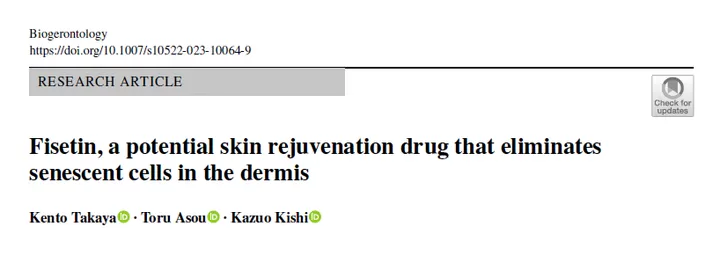
Fisetin is a natural flavonoid compound widely present in edible fruits and vegetables such as strawberries and apples. In recent years, its potential as a senolytic (senescent cell scavenger) has attracted widespread attention in the academic community—it can regulate signaling pathways including PI3K/AKT/mTOR, Wnt/β-catenin, NF-κB, and TRAIL/TRAIL-R, thereby exerting multiple effects such as anti-inflammation, antioxidant activity, inhibiting angiogenesis, and promoting skin rejuvenation.
To verify the effect of fisetin, the research team established different cellular senescence models through three methods: drug induction, irradiation treatment, and replicative senescence. These model cells all exhibited typical senescent characteristics: positive SA-β-gal staining, decreased BrdU uptake, impaired cell division ability, and a significant increase in the proportion of cells positive for the senescence marker p16ink4a—all of which confirmed the successful establishment of the senescence models.
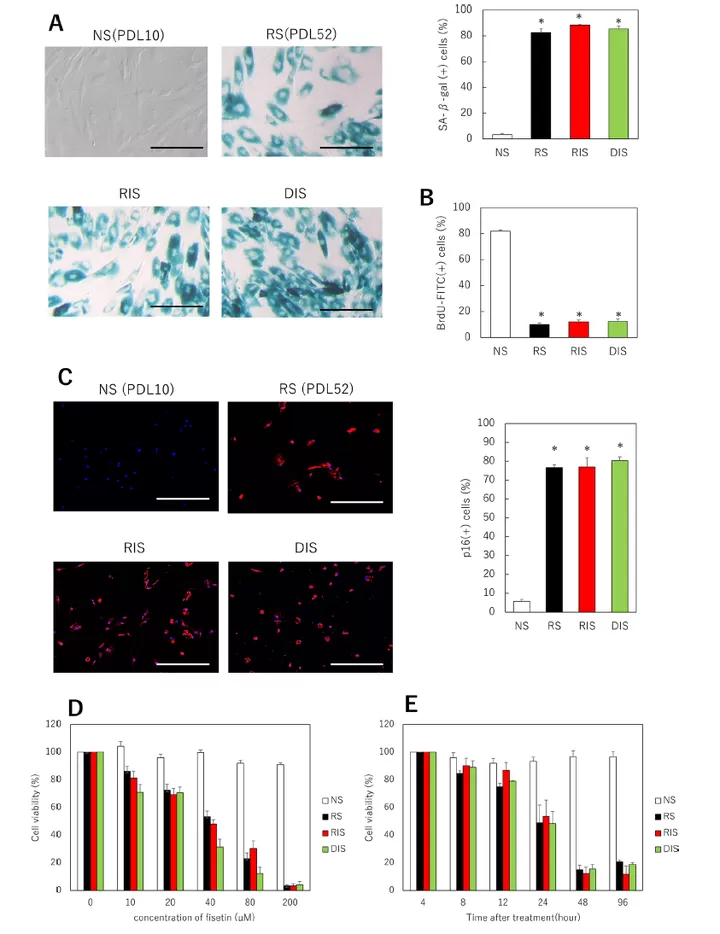
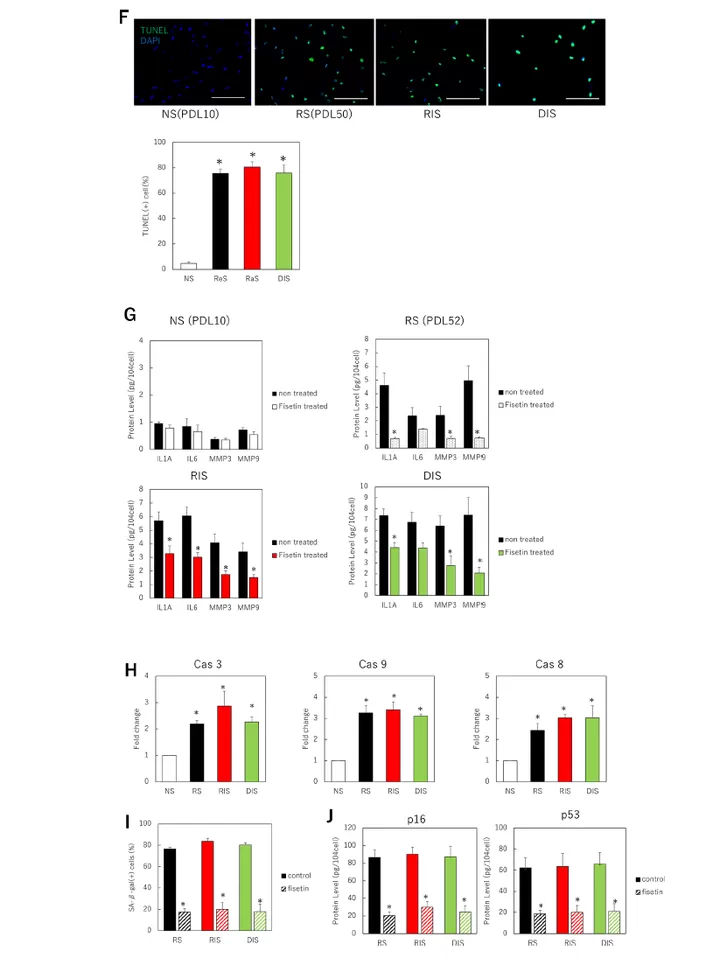
Subsequently, the research team treated non-senescent cells and the three aforementioned senescent cell types separately with fisetin, and the results showed:
The survival rate of non-senescent cells remained above 90% at all fisetin doses, with no significant impact on their viability;
In contrast, the viability of senescent cells decreased significantly, and the levels of inflammatory and matrix degradation-related cytokines they secreted (including IL-1α, IL-6, MMP3, and MMP9) were substantially reduced;
From the perspective of apoptotic mechanisms, after fisetin treatment, the levels of apoptosis-related proteins (such as caspase-3, caspase-8, and caspase-9) in senescent cells increased significantly, the number of SA-β-gal-positive cells decreased, and the expression of senescence-related proteins (such as p16 and p53) was also notably downregulated.
These results fully confirm that fisetin can selectively eliminate senescent fibroblasts without causing significant damage to normal cells.
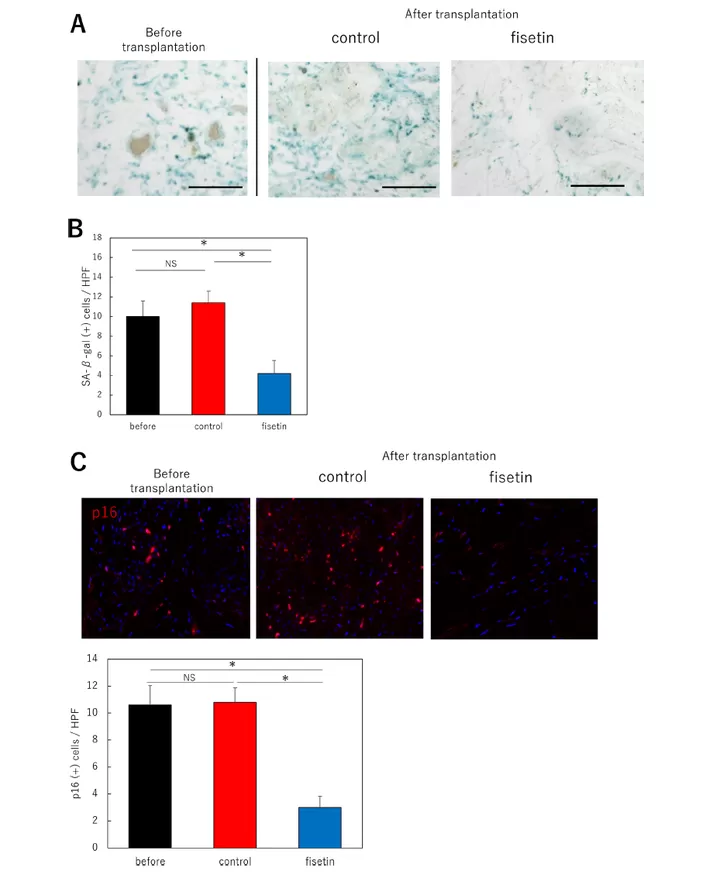
Beyond cellular experiments, the research team further adopted a human/mouse chimeric model to explore the practical effects of fisetin on aged human skin, with the following results:
Reduced SA-β-gal-positive cells: The transplanted aged human epidermal cells themselves were SA-β-gal-positive. After transplantation into mice, the number of SA-β-gal-positive cells in the control group showed no significant difference compared to before transplantation; however, after fisetin treatment, the number of such cells decreased significantly.
Decreased p16ink4a-positive cells: Observations via immunostaining revealed that in the skin samples from elderly male volunteers (before transplantation) and in the skin grafts of the post-transplant control group, a large number of p16ink4a-positive cells were present in the dermal layer. In contrast, the number of these senescence marker-positive cells was significantly reduced in the skin grafts treated with fisetin.
This indicates that in the in vivo model, fisetin can still specifically eliminate senescent cells in the dermal layer of human skin, further verifying its targeted anti-aging effect.
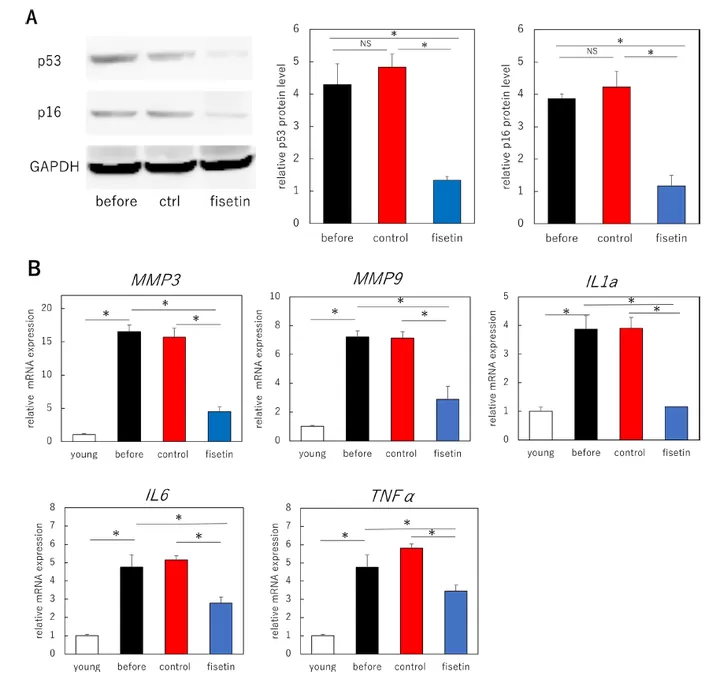
The research team also conducted an in-depth analysis of fisetin’s effects on SASP (senescence-associated secretory phenotype) and tissue morphology in aged skin:
1. Regulating SASP and Senescence Markers
Fisetin not only significantly reduced the expression of senescence markers such as p16 and p53 in aged skin but also markedly downregulated the gene expression of SASP molecules including MMP-3, MMP-9, IL-1α, IL-6, and TNF-α—thereby reducing aging-related inflammation and tissue damage at the source.
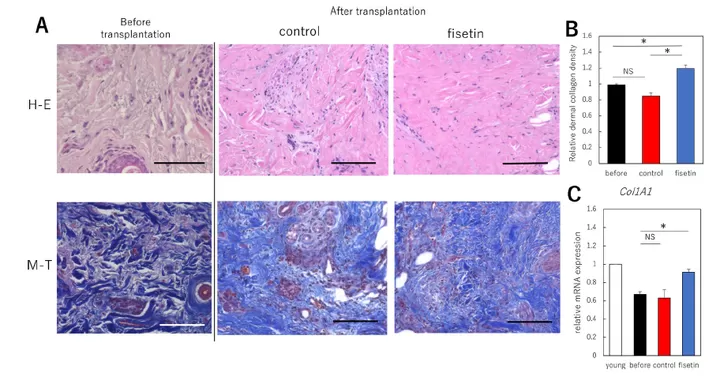
2. Improving Skin Tissue Morphology and Collagen Density
Observations via H&E staining and Masson’s trichrome (MT) staining revealed the following:
In the control group, obvious inflammatory cell infiltration was observed in the dermal layer of aged skin, while this phenomenon was absent in the fisetin treatment group;
The collagen fiber density in aged skin was significantly reduced, and fisetin treatment effectively increased this density;
The mRNA expression of Col1a1 (a key gene for collagen synthesis) was at low levels in both the pre-transplantation group and the control group, but was restored after fisetin treatment.
These results confirm that fisetin can effectively improve the phenotypes associated with skin aging, repair the structure of the dermal layer, and enhance skin health, which aligns with the growing interest in fisetin supplement benefits in anti-aging and dermatological research.
Based on a comprehensive analysis of the research results, fisetin exhibits dual characteristics: on one hand, it can selectively eliminate senescent cells, making it a potential Senolytic (senescent cell scavenger); on the other hand, it can regulate SASP expression, thereby functioning as a Senomorphic (senescence phenotype modulator).
Fisetin shows highly promising application prospects in the fields of skin anti-aging and health care, thanks to its core advantages such as selectively eliminating senescent cells in the dermal layer, regulating SASP (Senescence-Associated Secretory Phenotype), and improving skin aging phenotypes. As an enterprise focusing on fisetin supply, Natural Field has its own manufacturing facility, enabling us to achieve full-process control from raw material selection, production and processing to quality inspection, ensuring that every batch of products meets high-quality standards. We are committed to providing stable and reliable fisetin raw material support for B-end clients (such as cosmetics companies, nutraceutical manufacturers, etc.) for a long time. If you have needs for product procurement, cooperation consultation, etc., please feel free to contact us via the official email sales@natural-field.com. We look forward to working with you to explore the market value of fisetin and jointly expand new opportunities in the health industry.

Professor and Ph.D. Supervisor, School of Pharmaceutical Sciences, Southern Medical University. Head of the Functional Ingredient R&D Center, Natural Field. Professor Chong Li is a distinguished researcher in the field of advanced drug delivery systems and pharmaceutical technology innovation.


 EN
EN
 es
es  jp
jp  ko
ko  fr
fr  de
de  it
it  ru
ru  pt
pt  th
th  ar
ar  ms
ms