
Aging, as a complex biological process that occurs throughout life, is a core factor in the development of various chronic diseases, particularly significantly associated with the risk of Alzheimer's disease (AD). However, its underlying mechanisms remain to be elucidated.
In neuronal energy metabolism, guanosine triphosphate (GTP), a key molecule structurally similar to ATP, not only participates in cellular energy supply but also plays a vital role in synaptic plasticity maintenance, vesicle transport, and autophagy regulation. A recent study published in GeroScience by a team at the University of California, Irvine, titled "Treatment of age-related decreases in GTP levels restores endocytosis and autophagy," reveals that declining GTP levels in neurons during aging impair endocytosis and autophagy functions.
Using an aged mouse model, the study demonstrated that combined supplementation with nicotinamide (an NAD+ precursor, a form of vitamin B3) and green tea polyphenol EGCG (an Nrf2 activator) restored GTP levels in aged neurons to youthful states within 16–24 hours. This intervention not only significantly improved endocytosis and autophagy but also promoted the clearance of β-amyloid and increased neuronal survival rates by 22%, offering a novel approach for intervening in aging-related neurodegenerative diseases.
The research team from the University of California, Irvine systematically analyzed changes in GTP levels within neurons and their effects on cellular function across different age groups (young: 2-6 months, middle-aged: 8-11 months, old: 17-28 months) using Alzheimer's disease (AD) model mice and naturally aging control mice. By employing fluorescent sensors to monitor GTP levels in living cells in real time, the study revealed that:
Aging leads to a significant decrease in GTP levels in neurons (particularly in mitochondria), while AD model mice exhibit more severe GTP reduction as early as middle age, suggesting that AD may accelerate energy metabolism dysfunction.
As a key energy substrate for autophagy, GTP levels directly influence autophagic activity—inhibiting autophagy leads to GTP accumulation, whereas activating autophagy accelerates GTP consumption.
With advancing age, autophagy-related GTPases (such as Rab7 and Arl8b) abnormally accumulate in neurons, which may be associated with vesicle transport impairment caused by GTP deficiency.
Combined intervention with nicotinamide (NAD precursor) and green tea polyphenol EGCG (Nrf2 activator) can restore GTP levels in aged neurons to youthful levels within 16-24 hours.
This treatment significantly reduces the number and size of Rab7/Arl8b-positive vesicles, demonstrating its ability to improve autophagic-lysosomal function by restoring GTP homeostasis.
This study not only reveals common mechanisms of energy metabolism dysfunction in aging and AD, but also provides experimental evidence for GTP metabolism-targeted neuroprotective strategies.
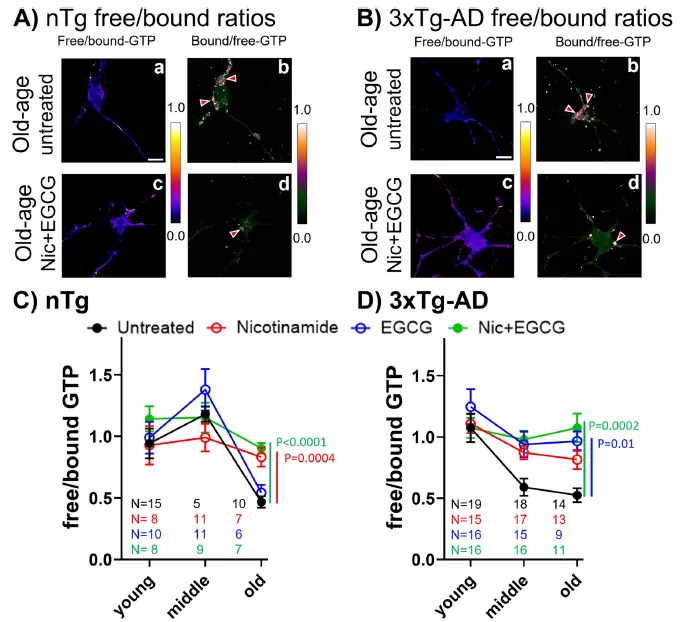
(Nicotinamide + EGCG treatment restores neuronal GTP levels)
Moreover, the combination therapy also promoted the clearance of intracellular β-amyloid protein, reduced levels of protein oxidation, and increased neuronal survival rates by 22%. These findings demonstrate that restoration of GTP levels facilitates the clearance of Aβ and oxidatively damaged proteins.
The research team noted that this study represents the first systematic elucidation of the critical regulatory role of GTP metabolism in aging and Alzheimer's disease (AD) progression. However, as the current research is primarily based on in vitro cell experiments, its clinical translation still requires further validation through animal models and human clinical trials.
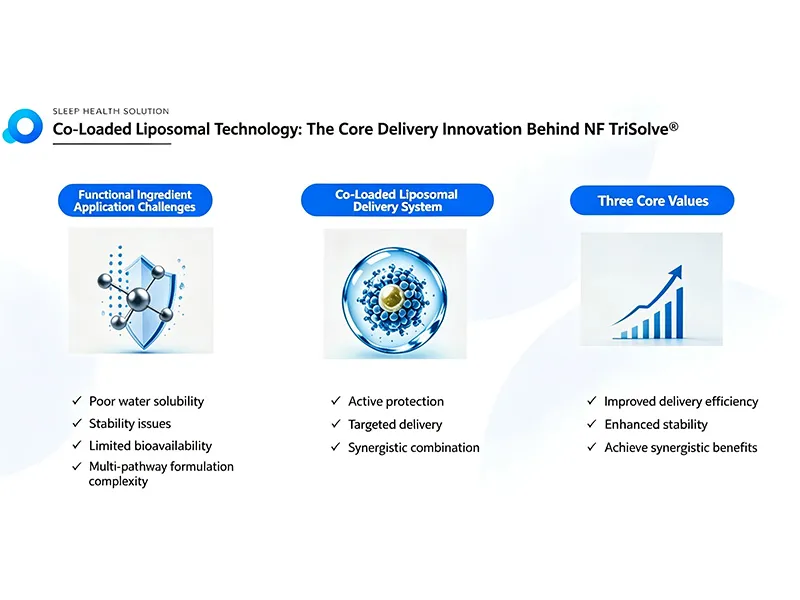
Notably, a recent clinical trial conducted by the University of California found that orally administered nicotinamide is prone to bioinactivation in the bloodstream, limiting its therapeutic efficacy. This finding suggests that future research needs to optimize drug delivery methods or develop more stable drug delivery systems to improve treatment efficiency.
Despite these challenges, this study holds significant theoretical value. It not only reveals the central role of GTP homeostasis in neurodegenerative diseases but also lays a scientific foundation for developing novel intervention strategies. These discoveries provide potential therapeutic targets for ultimately delaying, halting, or even reversing the pathological processes of aging and AD.
References:
https://doi.org/10.1007/s11357-025-01786-4

Professor and Ph.D. Supervisor, School of Pharmaceutical Sciences, Southern Medical University. Head of the Functional Ingredient R&D Center, Natural Field. Professor Chong Li is a distinguished researcher in the field of advanced drug delivery systems and pharmaceutical technology innovation.
.webp "How to Choose a China Coenzyme Q10 Bulk Powder Manufacturer?")
 EN
EN
 es
es  jp
jp  ko
ko  fr
fr  de
de  it
it  ru
ru  pt
pt  th
th  ar
ar  ms
ms