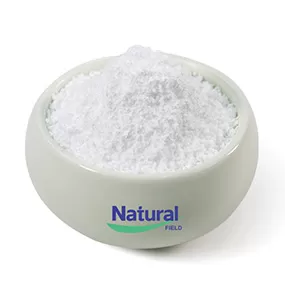

Sleep supplements have moved beyond the simple goal of helping people fall asleep. Today, product developers are looking at sleep as a combination of circadian rhythm, nervous system activity, stress, and overall sleep quality.
Within this broader approach, GABA (gamma-aminobutyric acid) has become an increasingly interesting functional ingredient for sleep and relaxation formulations.
But what does the science actually say about GABA, and where does it fit in a modern sleep formula?

GABA is a naturally occurring four-carbon amino acid and one of the major inhibitory neurotransmitters in the mammalian nervous system. By interacting with GABA receptors, it helps regulate neuronal excitability and plays an important role in the sleep-wake cycle.
This biological role is one reason GABA has attracted attention in functional foods and dietary supplements designed to support relaxation and sleep.
At the same time, oral GABA should not simply be described as a substance that “enters the brain and induces sleep.” Whether orally consumed GABA reaches the central nervous system in meaningful amounts remains an area of scientific discussion. Recent research has therefore also explored peripheral signaling, stress regulation, and the gut-brain axis as possible contributors to its effects.
Human research on oral GABA is still developing, but several controlled studies have reported encouraging findings.
A 2016 randomized, placebo-controlled crossover study found that oral GABA was associated with shorter sleep latency and increased total non-REM sleep time. Blood GABA levels also increased after intake, reaching their highest level around 30 minutes after administration.
In a 2018 randomized, double-blind, placebo-controlled study, adults with insomnia symptoms received 300 mg of fermented rice-germ-derived GABA daily for four weeks. The GABA group showed reduced sleep latency and improved sleep efficiency based on polysomnography.
A later 2022 trial examined a lower dose of 75 mg natural GABA. After four weeks, the GABA group showed reduced sleep latency, increased N3 sleep, and a lower arousal index. The findings also suggested that the lower dose may be more relevant to sleep-onset difficulties than to sleep maintenance.
However, the overall evidence should be interpreted carefully. A 2020 systematic review of 14 placebo-controlled human studies concluded that evidence for sleep benefits from oral GABA remained limited, partly because studies differed in dose, duration, participants, and outcome measures.
More recently, a 2026 review published in Trends in Food Science & Technology reached a similar but more refined conclusion: dietary GABA appears most consistently associated with shorter sleep onset latency, while findings related to sleep maintenance, sleep architecture, and subjective sleep quality remain less consistent. The review also highlighted the potential influence of dosage, formulation, food matrix, and multi-component systems.
For product developers, this distinction matters. GABA shows promising potential, particularly for sleep onset and relaxation, but its role is better understood as one functional component within a broader sleep formulation, rather than a standalone solution for every aspect of sleep.
Based on current research, GABA may be particularly relevant to:
Sleep onset and relaxation
Neural excitability and neurotransmitter balance
Sleep-related arousal
Selected aspects of sleep architecture
The strength of evidence varies across these areas, and further clinical research is still needed. For formulators, this makes GABA an interesting building block rather than a one-size-fits-all sleep ingredient.
The growing interest in GABA reflects a broader shift in sleep product development.
Instead of focusing on a single outcome such as sleep onset, formulators are increasingly considering several interconnected aspects of sleep health:
Neural relaxation and neurotransmitter balance
Sleep onset
Sleep maintenance
Stress and relaxation
Overall sleep quality
This is also where ingredient combinations become more relevant.
GABA can contribute to the neurotransmitter-balance pathway, while other ingredients may address different aspects of the sleep process. For example, melatonin is commonly used to support circadian rhythm, while L-theanine and magnesium glycinate are frequently incorporated into relaxation- and sleep-oriented formulations.
Rather than treating each ingredient as an isolated solution, recent research is increasingly exploring how GABA may work within broader physiological and multi-component systems.
At Natural Field, we apply this formulation approach through NF TriSolve® Sleep Health Solution.
Rather than positioning GABA as a standalone sleep ingredient, NF TriSolve® integrates GABA with complementary functional ingredients across three pathways:
Melatonin
GABA, L-theanine, and magnesium glycinate
Ashwagandha
This multi-pathway structure is designed to address different dimensions of sleep health instead of relying on a single active ingredient.
The formulation is further supported by Natural Field's co-loaded liposomal delivery technology, which co-encapsulates Ashwagandha and melatonin within a liposomal system.
For product developers, the question is therefore not simply which sleep ingredient to use, but how different ingredients can be combined to address complementary aspects of sleep health.
GABA remains an active area of research in sleep nutrition. Current evidence is promising, particularly around sleep onset, while further research is needed to clarify its effects across different sleep outcomes.
For modern sleep formulations, its value may lie not only in its individual function, but also in how it fits into a well-designed, multi-pathway system.
That is the thinking behind NF TriSolve® Sleep Health Solution—combining functional ingredients, formulation strategy, and advanced delivery technology to support the development of next-generation sleep health products.
1. Hepsomali P, Groeger JA, Nishihira J, Scholey A. Effects of Oral Gamma-Aminobutyric Acid (GABA) Administration on Stress and Sleep in Humans: A Systematic Review. Frontiers in Neuroscience. 2020;14:923.
2. Byun JI, Shin YY, Chung SE, Shin WC. Safety and Efficacy of Gamma-Aminobutyric Acid from Fermented Rice Germ in Patients with Insomnia Symptoms: A Randomized, Double-Blind Trial. Journal of Clinical Neurology. 2018;14(3):291–295.
3. Yoon S, et al. Efficacy and Safety of Low-Dose Gamma-Aminobutyric Acid From Unpolished Rice Germ as a Health Functional Food for Promoting Sleep: A Randomized, Double-Blind, Placebo-Controlled Trial. Journal of Clinical Neurology. 2022;18(4):478–486.
4. Yamatsu A, Yamashita Y, Pandharipande T, Maru I, Kim M. Effect of Oral γ-Aminobutyric Acid (GABA) Administration on Sleep and Its Absorption in Humans. Food Science and Biotechnology. 2016;25(2):547–551.
5. Li S, Qu X, Xi Y, Li J. From Foods to Sleep: Dietary γ-Aminobutyric Acid Enrichment and Evidence-Based Multi-Pathway Regulation of Sleep Health. Trends in Food Science & Technology. 2026;177:106026.

Professor and Ph.D. Supervisor, School of Pharmaceutical Sciences, Southern Medical University. Head of the Functional Ingredient R&D Center, Natural Field. Professor Chong Li is a distinguished researcher in the field of advanced drug delivery systems and pharmaceutical technology innovation.
 EN
EN
 es
es  jp
jp  ko
ko  fr
fr  de
de  it
it  ru
ru  pt
pt  th
th  ar
ar  ms
ms