
In the field of health and anti-aging, NAD+ is an unavoidable name. This substance, which has been continuously studied by scientists for 100 years, has frequently appeared in top medical journals in recent years and become the focus of attention in the global health field. So, what exactly is NAD+, which has undergone a century of scientific research verification? Why has it long occupied the research vision of scientists, and what important significance does it have for our bodies? Today, we will clarify it all at once.
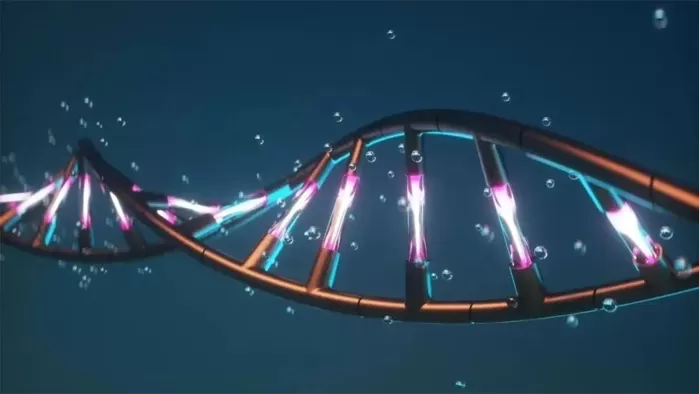
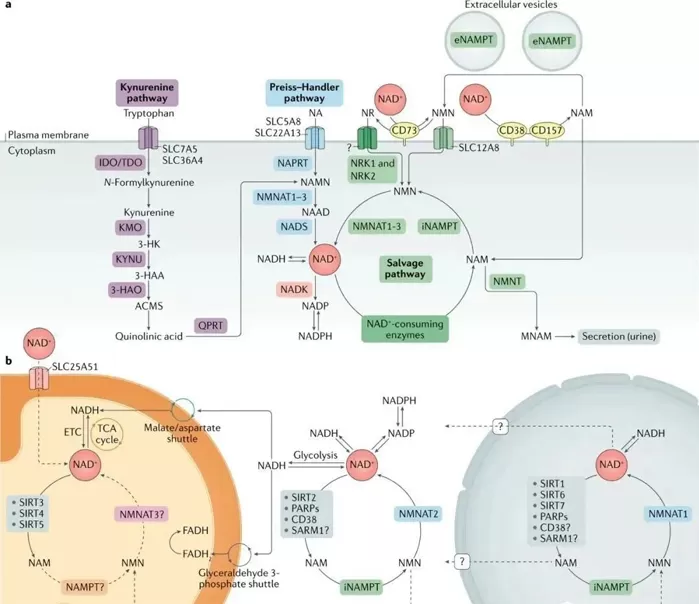
To understand the importance of NAD+, we first need to figure out what it is. The scientific name of NAD+ is nicotinamide adenine dinucleotide. It is not an exogenous "high-tech ingredient" but a key substance inherently present in every cell of our human body. As a core coenzyme, NAD+ is like an "energy shuttle bus" inside cells, specifically responsible for carrying electrons, transferring them between different molecules, and participating in thousands of redox reactions in the body.
The core product of these reactions is adenosine triphosphate (ATP) — the "energy currency" of our body. In other words, our metabolism and physical energy supply are inseparable from the "operation" of NAD+. More importantly, the role of NAD+ is far more than energy supply: DNA repair and maintenance, regulation of genetic stability, regulation of epigenetics, and even the metabolic balance of carbohydrates, fats, and proteins all require its participation. Statistics show that more than 300 enzymes in the human body must rely on NAD+ to work normally, which is enough to show its fundamental role in overall health.
The reason why NAD+ is deeply bound to "anti-aging" lies in the core fact that: as we age, the level of NAD+ in our body will continue to decline. This decline directly leads to insufficient cellular energy supply, slowed metabolism, and weakened DNA repair capacity — these are the core characteristics of aging. When cells cannot repair damage in a timely manner and energy is continuously scarce, the skin will sag, physical strength will decline, organ functions will deteriorate, and various aging-related problems will follow.
Simply put, NAD+ is like the "fuel" that maintains the "young state" of human cells. With sufficient fuel, cells can operate efficiently, and the body can maintain healthy vitality; when fuel decreases, cell functions will decline, and signs of aging will naturally appear earlier. This is why supplementing NAD+ related precursors has become an important direction in anti-aging research — essentially, it is to increase the level of NAD+ in the body to "charge" cells and delay the aging process.
If the physiological role of NAD+ is the "internal reason" for it to become the focus, then the nearly 100-year history of scientific research is its "hardcore endorsement". Since its discovery, the research history of NAD+ has spanned a century, and many Nobel Prize winners have laid the foundation for its research.
As early as 1904, the British biochemist Sir Arthur Harden first discovered NAD+. This discovery earned him the Nobel Prize in Chemistry in 1929; also winning the prize that year was the Swedish scientist Hans von Euler-Chelpin, who successfully isolated and purified NAD+ and revealed its dinucleotide molecular structure; in 1931, Otto Warburg, the winner of the Nobel Prize in Physiology or Medicine, further discovered that NAD+ plays a key role in human material and energy metabolism as a coenzyme, completely clarifying its physiological value.
Entering the modern era, the anti-aging potential of NAD+ has been continuously explored. In 1980, the Austrian scientist George Birkmayer first applied reduced NAD+ to disease treatment, opening the way for its application exploration; between 2000 and 2012, discoveries by several top research teams shocked the medical community: they confirmed in Caenorhabditis elegans, Drosophila, and mice respectively that increasing NAD+ levels can significantly extend the lifespan of these organisms — among them, the lifespan of Caenorhabditis elegans was extended by nearly 50%, and the lifespan of male mice was extended by more than 10%.
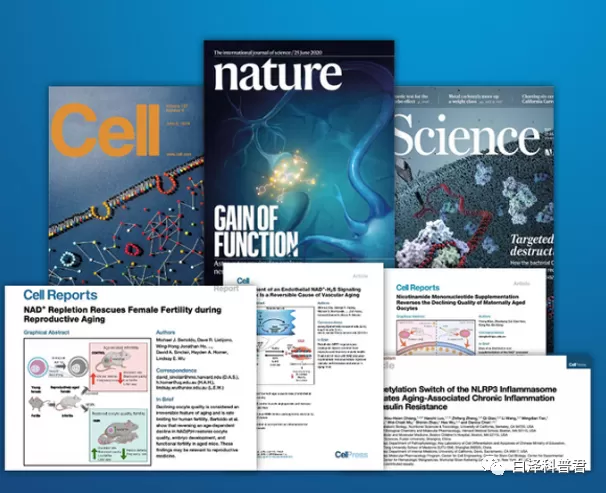
These breakthrough discoveries have established an inseparable connection between NAD+ and anti-aging. In recent years, research on NAD+ has almost dominated top global SCI academic journals such as Science, Nature, and Cell, becoming one of the most sensational discoveries in the medical community. Scientists generally believe that the research on NAD+ is a historic step forward for humans in the journey of fighting aging and extending lifespan.
In summary, it is no accident that NAD+ has become the core focus in the field of anti-aging: it is the "energy core" indispensable to human cells, directly determining the vitality and health of cells; the decline in its level is directly related to the aging process, and supplementing it has become a key idea to delay aging; more importantly, nearly a century of scientific research, the exploration of many Nobel Prize winners, and the verification of numerous preclinical studies have provided solid scientific support for its value.
With the continuous in-depth research, the anti-aging potential of NAD+ is being further unlocked. For us who pursue healthy longevity, understanding the role of NAD+ and paying attention to the progress of related research may provide a new direction for our health management. After all, real anti-aging has always been based on scientific exploration and accumulation — and NAD+ is one of the most dazzling achievements in this exploration.

Professor and Ph.D. Supervisor, School of Pharmaceutical Sciences, Southern Medical University. Head of the Functional Ingredient R&D Center, Natural Field. Professor Chong Li is a distinguished researcher in the field of advanced drug delivery systems and pharmaceutical technology innovation.
 EN
EN
 es
es  jp
jp  ko
ko  fr
fr  de
de  it
it  ru
ru  pt
pt  th
th  ar
ar  ms
ms