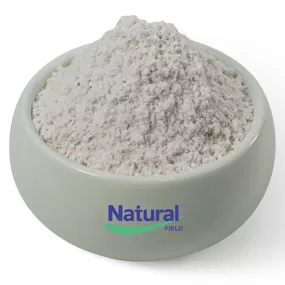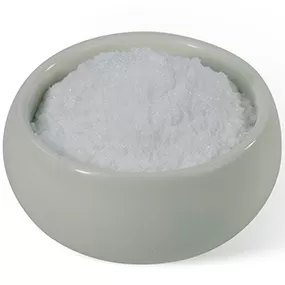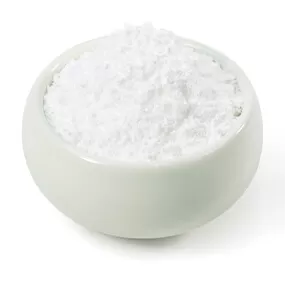

Creatine monohydrate bulk is rapidly evolving from a traditional sports nutrition ingredient into a high-demand functional raw material across multiple industries.
Recent developments around the U.S. National Defense Authorization Act (NDAA) suggest that creatine may be evaluated for inclusion in military-ready meals (MREs). This highlights a critical shift: creatine is being recognized not only for performance enhancement, but also for resilience, recovery, and sustained energy output in high-demand environments.
For supplement brands and ingredient buyers, this signals a strong opportunity to buy creatine monohydrate in bulk and position it across broader application scenarios.

The global demand for high quality creatine monohydrate is no longer limited to fitness users. New research and consumer behavior are driving growth in:
Women’s health supplements – supporting muscle retention, bone density, and healthy aging
Cognitive and nootropic formulations – improving focus, reducing mental fatigue, and supporting brain energy metabolism
Daily energy products – targeting professionals, gamers, and high-performance lifestyles
This shift is transforming creatine into a mainstream functional ingredient, increasing demand for creatine monohydrate suppliers with stable quality and scalable capacity.
As one of the most researched compounds in nutrition science, creatine continues to stand out for both safety and efficacy.
Functionally, it supports the regeneration of ATP, the primary energy molecule in the human body. While the body can synthesize creatine, supplementation is often more efficient—especially for populations with low dietary intake.
Key benefits supported by clinical research include:
Increased muscle strength and lean mass
Faster recovery and reduced fatigue
Enhanced cognitive performance under stress
Support for vegetarian and low-protein populations
These advantages make bulk creatine monohydrate powder a strategic ingredient for a wide range of formulations.
Formulation Trends: Differentiation Through Delivery Systems
As competition intensifies, brands are moving beyond standard formats and exploring advanced delivery technologies.
One of the fastest-growing segments is liposomal creatine, which offers improved absorption and positioning for premium product lines. This creates opportunities for brands to differentiate while maintaining the proven benefits of creatine.
At the same time, combination formulations with BCAA powder are gaining traction in sports recovery and performance-focused products.
Natural Field is a professional creatine monohydrate supplier, providing:
High quality creatine monohydrate bulk powder for global manufacturers
Liposomal creatine powder for advanced formulations
BCAA bulk powder for complementary product development
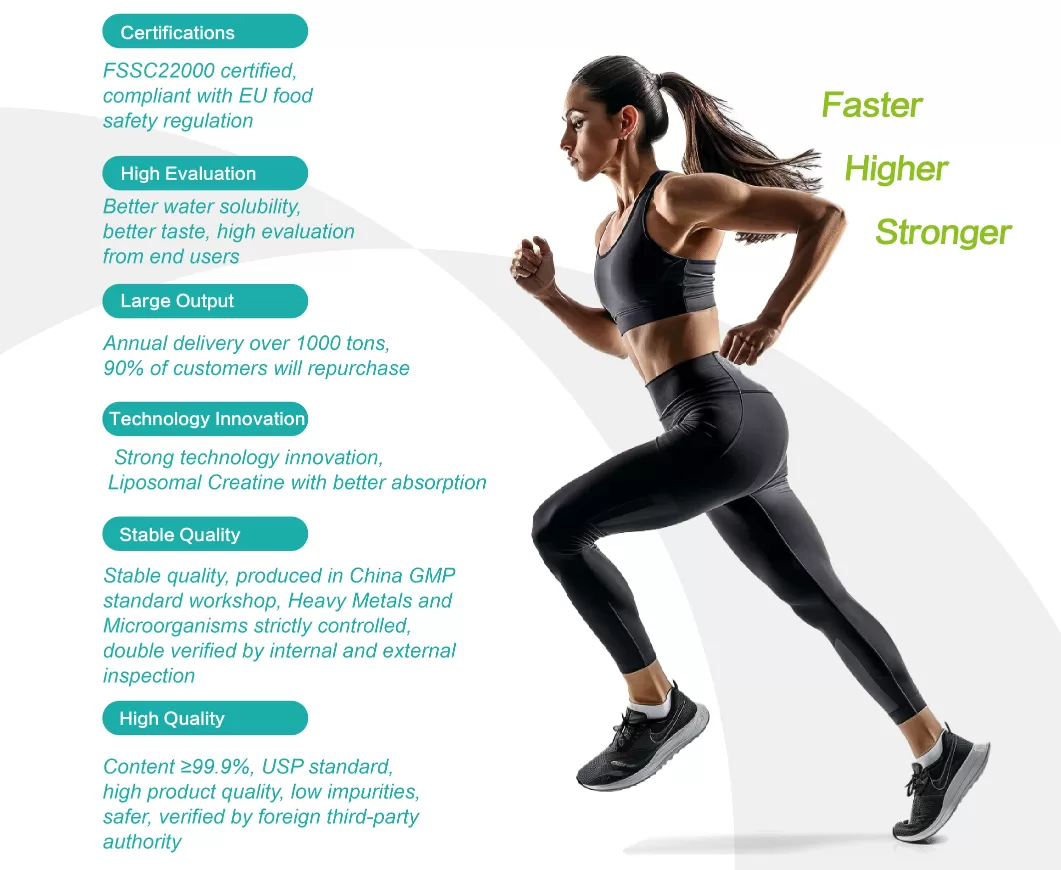
We support partners looking to buy creatine monohydrate in bulk with consistent quality, scalable production, and flexible solutions for different market needs.
United States House of Representatives Committee on Armed Services. “Servicemember Quality of Life Improvement and National Defense Authorization Act for Fiscal Year 2025. Report.” 118th Congress, 2nd Session.Natural Products Association. “House Appropriators Call for Department of Defense to Study Creatine to Strengthen Our Troops”. 31 May 2024. https://www.npanational.org/news/house-appropriators-call-for-department-of-defense-to-study-creatine-to-strengthen-our-troops/Poortmans, Jacques R., and Marc Francaux. “Long-Term Oral Creatine Supplementation Does Not Impair Renal Function in Healthy Athletes.” Medicine & Science in Sports & Exercise, vol. 31, no. 8, Aug. 1999, pp. 1108–1110, doi:10.1097/00005768-199908000-00005. https://pubmed.ncbi.nlm.nih.gov/10449011/Jäger, Ralf, et al. “Analysis of the Efficacy, Safety, and Regulatory Status of Novel Forms of Creatine.” Amino Acids, vol. 40, no. 5, 22 Mar. 2011, pp. 1369–1383, doi:10.1007/s00726-011-0874-6. https://www.ncbi.nlm.nih.gov/pmc/articles/PMC3080578/Kreider, Richard B., et al. “Bioavailability, Efficacy, Safety, and Regulatory Status of Creatine and Related Compounds: A Critical Review.” Nutrients, vol. 14, no. 5, 28 Feb. 2022, p. 1035, doi:10.3390/nu14051035. https://www.ncbi.nlm.nih.gov/pmc/articles/PMC8912867/Wallimann, Theo, et al. “The Creatine Kinase System and Pleiotropic Effects of Creatine.” Amino Acids, vol. 40, no. 5, 1 May 2011, pp. 1271–1296, doi:10.1007/s00726-011-0877-3. https://www.ncbi.nlm.nih.gov/pmc/articles/PMC3080659/Greenhaff, P. L., et al. “Effect of Oral Creatine Supplementation on Skeletal Muscle Phosphocreatine Resynthesis.” American Journal of Physiology-Endocrinology and Metabolism, vol. 266, no. 5, 1 May 1994, pp. E725–E730, doi:10.1152/ajpendo.1994.266.5.e725. https://pubmed.ncbi.nlm.nih.gov/8203511/Hultman, E., et al. “Muscle Creatine Loading in Men.” Journal of Applied Physiology, vol. 81, no. 1, July 1996, pp. 232–237, pubmed.ncbi.nlm.nih.gov/8828669/, doi:10.1152/jappl.1996.81.1.232. https://pubmed.ncbi.nlm.nih.gov/8828669/
Ydfors, Mia, et al. “Modellingin Vivocreatine/Phosphocreatinein Vitroreveals Divergent Adaptations in Human Muscle Mitochondrial Respiratory Control by ADP after Acute and Chronic Exercise.” The Journal of Physiology, vol. 594, no. 11, 4 Feb. 2016, pp. 3127–3140, doi:10.1113/jp271259. https://www.ncbi.nlm.nih.gov/pmc/articles/PMC4887669/Brosnan, John T., et al. “The Metabolic Burden of Creatine Synthesis.” Amino Acids, vol. 40, no. 5, 1 May 2011, pp. 1325–1331, pubmed.ncbi.nlm.nih.gov/21387089/, doi:10.1007/s00726-011-0853-y. https://link.springer.com/article/10.1007/s00726-011-0853-yChilibeck, Philip, et al. “Effect of Creatine Supplementation during Resistance Training on Lean Tissue Mass and Muscular Strength in Older Adults: A Meta-Analysis.” Open Access Journal of Sports Medicine, vol. Volume 8, Nov. 2017, pp. 213–226, doi:10.2147/oajsm.s123529. https://www.ncbi.nlm.nih.gov/pmc/articles/PMC5679696/Burke, Ryan, et al. “The Effects of Creatine Supplementation Combined with Resistance Training on Regional Measures of Muscle Hypertrophy: A Systematic Review with Meta-Analysis.” Nutrients, vol. 15, no. 9, 1 Jan. 2023, p. 2116, doi:10.3390/nu15092116. https://www.ncbi.nlm.nih.gov/pmc/articles/PMC10180745/Forbes, Scott C., et al. “Meta-Analysis Examining the Importance of Creatine Ingestion Strategies on Lean Tissue Mass and Strength in Older Adults.” Nutrients, vol. 13, no. 6, 2 June 2021, p. 1912, doi:10.3390/nu13061912. https://www.ncbi.nlm.nih.gov/pmc/articles/PMC8229907/

Professor and Ph.D. Supervisor, School of Pharmaceutical Sciences, Southern Medical University. Head of the Functional Ingredient R&D Center, Natural Field. Professor Chong Li is a distinguished researcher in the field of advanced drug delivery systems and pharmaceutical technology innovation.
 EN
EN
 es
es  jp
jp  ko
ko  fr
fr  de
de  it
it  ru
ru  pt
pt  th
th  ar
ar  ms
ms