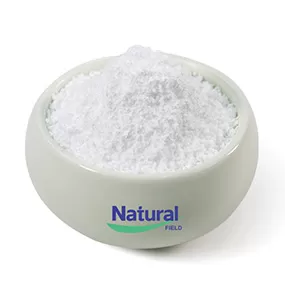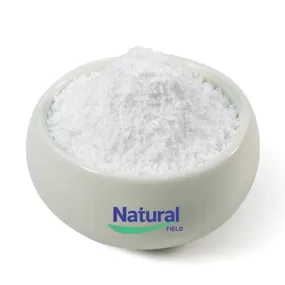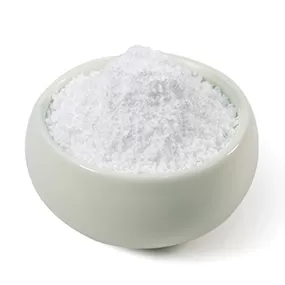

When sourcing creatine monohydrate powder from China, buyers often care about more than price and stock availability. The key question is whether the supplier can provide verified raw material identity, stable specifications, batch-specific documents, suitable packaging and reliable bulk supply.
Creatine monohydrate is a common sports nutrition raw material, but commercial sourcing requires a practical review process. Before confirming a wholesale order, buyers need to check CAS 6020-87-7, product specification, COA, MSDS, particle size, MOQ, lead time, packaging details and repeat supply capability.
This guide answers common sourcing questions, including where to buy bulk creatine monohydrate from China, how to confirm product identity, what specifications should be reviewed, how the material is produced, and how to evaluate a reliable Chinese manufacturer for long-term cooperation.
Buyers looking for bulk supply from China may find different types of partners, including factories, manufacturers, suppliers, exporters, distributors and resellers. Each type may fit a different purchasing need, depending on order volume, documentation requirements, lead time and long-term cooperation plan.
For bulk purchasing, the key is not simply choosing the lowest quotation. Buyers should confirm whether the supplier can support product verification, sample evaluation, quality document review, packaging confirmation and repeat order planning.
A factory or manufacturer-supported supply model is usually more suitable for long-term projects that require stable specifications and batch consistency. Exporters may provide stronger shipment and trade document support, while distributors or resellers may be more suitable for smaller or flexible orders. For commercial raw material sourcing, buyers should always confirm the production source, document support and batch traceability before placing an order.
Before placing a creatine monohydrate powder bulk order, buyers should confirm whether the supplier can meet the requirements of procurement, quality control and production teams. A low price may look attractive at the beginning, but incomplete documents, unclear specifications or unstable supply can create problems during later production or import review.
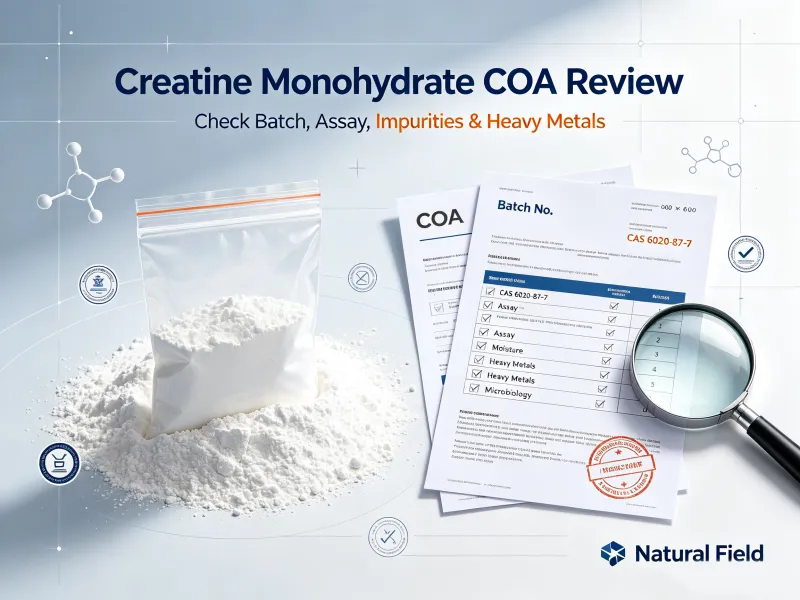
Buyers should confirm whether the supplier can provide a batch-specific COA, clear product specification, MSDS, particle size information, packaging details and export support. They should also ask about MOQ, lead time, storage requirements and repeat supply capability.
For long-term wholesale sourcing, the supplier should be able to support more than one transaction. It should help buyers move from sample evaluation to internal approval, bulk purchasing and repeat order communication.
Product identity and specification review are the foundation of raw material sourcing. Buyers should check whether the product name, CAS number, appearance, assay, particle size, test method and documents are consistent across the quotation, COA, specification sheet and sample label.
For creatine monohydrate sourcing, CAS 6020-87-7 can be used as an important identity reference during document review. However, buyers should not check the CAS number alone. It should be reviewed together with assay, appearance, test method, particle size and batch documents.
Specification Item
Product Name
CAS Number
Assay
Appearance
Test Method
Loss on Drying
Particle Size
Heavy Metals
Microbiology
Storage Condition
A reliable supplier should provide a clear specification sheet and batch-related COA, not only a product name and quotation.
A regulated chemical synthesis is used in a factory to manufacture creatine monohydrate powder. In a hot, pressured reactor, workers mix cyanamide and sodium sarcosinate. The resultant liquid cools to form creatine crystals, which are then centrifuged to purify them, vacuum-dried, ground into a fine powder, and checked for safety before being packaged.
Raw materials: Cyanamide, a chemical molecule, and sodium sarcosinate, a derivative of amino acids, are used in factories.
Reaction vessel: In a sizable, heated, pressurized industrial reactor, the components combine with catalysts.
Crystallization: The combination becomes a liquid as a result of the chemical process, and as it cools, it precipitates into raw creatine crystals.
Centrifugation: High-speed industrial centrifuges are used to spin off and remove contaminants and liquid chemical byproducts from the crystal slurry.
Vacuum drying: To remove all residual moisture without deteriorating the compound, the wet crystal mass is placed within a vacuum drying machine.
Milling: A mechanical mill is fed dry crystals.
Fine mesh: The machine produces an ultra-fine (micronized) powder that dissolves readily in liquids by crushing the crystals down, usually to a 200 mesh size.
Testing: Batches are examined by lab technicians for purity, concentration levels, heavy metals, and micro-contaminants such as DCD.
Sealing: The authorized powder is metered, sieved, and sealed into tubs or pouches on automated packaging machines.
When communicating with a factory, buyers should focus on questions that affect production stability, batch consistency and long-term supply. These questions are different from general quotation questions because they help evaluate whether the manufacturer can support commercial raw material projects.
Useful questions include:
Is production managed by batch?
Can each batch be supported with a COA?
What test method is used for assay?
What particle size options are available?
Can the supplier provide samples before bulk order?
What is the MOQ for wholesale purchasing?
What packaging formats are available?
Can repeat orders be supported with stable quality?
Are export documents available?
Can third-party testing be arranged if required?
These questions help buyers understand whether the factory has real production and quality-control capability, instead of only providing price and stock information.
Before confirming a wholesale order, buyers usually need a complete document package for procurement, quality, R&D and import review. These documents help confirm whether the raw material matches the required specification, whether the batch can be traced, and whether the supplier can support commercial purchasing.
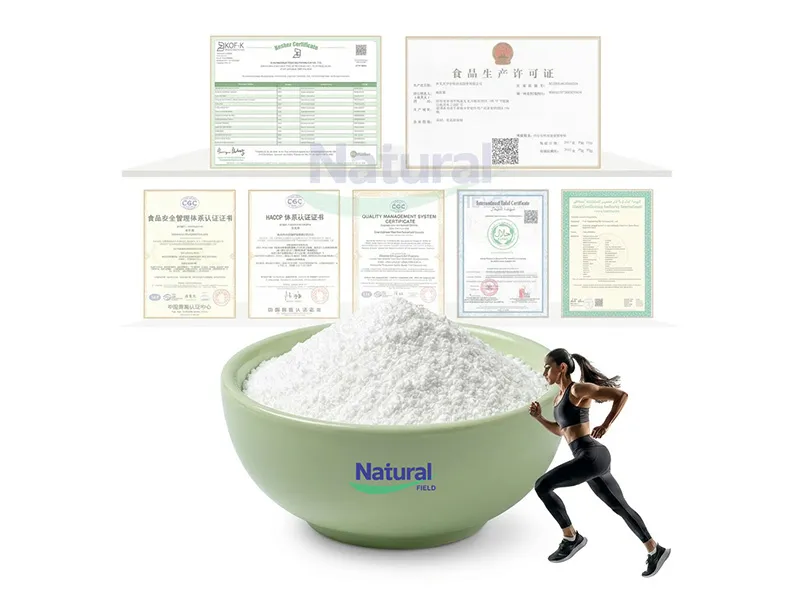
Common documents include COA, MSDS, specification sheet, certificate information, packaging details, storage conditions, shelf-life information and third-party test reports if required.
The COA is used to review batch-specific test results, while the specification sheet defines the expected quality standard. MSDS and storage information support handling, warehouse and shipment review. Certificate information helps buyers evaluate supplier qualification before long-term cooperation.
For buyers planning repeat orders, document consistency is especially important. If documents are incomplete, outdated or not connected to the actual batch, the buyer should request clarification before approving the material.
A reliable Chinese manufacturer should support the full sourcing process, not only provide a low quotation. For wholesale buyers, supplier reliability should be reviewed from several practical aspects: product transparency, document support, production capability, communication efficiency, packaging suitability and export experience.
First, the supplier should be able to provide clear product identity and specification information. Buyers should see consistent product details across the quotation, COA, specification sheet and sample label. If basic information such as CAS number, assay, particle size or test method is unclear, it may create uncertainty during internal review.
Second, the supplier should provide quality documents in a timely manner. COA, MSDS, specification sheet, certificate information, packaging details and storage conditions are important for procurement, quality and R&D teams. For bulk orders, batch-specific documents are more valuable than generic product information.
Third, buyers should review whether the manufacturer can support repeat commercial orders. A suitable supplier should have stable supply capability, clear MOQ communication, reasonable lead time and packaging options suitable for export. For long-term cooperation, stable quality and reliable communication are often more important than the lowest price.
Finally, communication matters. A reliable manufacturer should be able to answer questions about specifications, samples, documents, packaging, shipment and repeat orders clearly. If the supplier can only discuss price but cannot explain quality documents or production support, buyers should be cautious before moving forward.
Natural Field supports global buyers with creatine monohydrate raw material supply, specification communication, document support, sample evaluation, packaging discussion and commercial order coordination.
For buyers sourcing from China, Natural Field can help confirm key procurement information such as product identity, CAS number, specification, COA, MSDS, particle size options, packaging requirements and bulk order planning. This support helps buyers connect raw material specifications with real commercial purchasing needs.
Natural Field’s value is not only product supply. It also supports buyers during the review process before bulk purchasing, including sample communication, document preparation, export coordination and repeat-order communication. This is especially useful for brands, importers, distributors and contract manufacturers that need stable long-term supply.
Buyers can source from Chinese manufacturers, suppliers, exporters or distributors. Before placing a bulk order, they should confirm product identity, specification, COA, MSDS, packaging, MOQ, lead time and export support.
Buyers should review product identity, CAS number, assay, test method, particle size, COA, MSDS, packaging, storage conditions, MOQ, lead time and repeat supply capability.
CAS 6020-87-7 helps confirm raw material identity during specification review, COA comparison and procurement communication. It should be checked together with product name, assay, appearance and test method.
It is generally produced through raw material verification, controlled processing, crystallization, separation, drying, milling, sieving, testing and packaging.
Buyers should evaluate product transparency, quality documents, production capability, sample support, packaging options, export communication and long-term supply stability.
Explore more Natural Field articles related to creatine monohydrate powder, sports nutrition ingredients and B2B raw material sourcing:
Selecting Quality Creatine Monohydrate Powder: A Professional Buying Guide
Creatine Monohydrate: Beyond Muscle Gain — The Science-Backed Brain Health Nutrient
The Safety of Creatine Monohydrate: A Supplement to Use with Confidence
Creatine Monohydrate: A Must-Have Supplement for Athletes and Fitness Enthusiasts
Creatine Is Going Mainstream: From Niche Sports Supplement to Everyday Functional Food Ingredient

Professor and Ph.D. Supervisor, School of Pharmaceutical Sciences, Southern Medical University. Head of the Functional Ingredient R&D Center, Natural Field. Professor Chong Li is a distinguished researcher in the field of advanced drug delivery systems and pharmaceutical technology innovation.
 EN
EN
 es
es  jp
jp  ko
ko  fr
fr  de
de  it
it  ru
ru  pt
pt  th
th  ar
ar  ms
ms