
Starting at age 40, the human body undergoes rapid aging both inside and out. What alarms scientists is a 'silent revolution' happening at the cellular level: your telomeres may have already shortened by 25%.
What truly governs our aging process are two microscopic yet pivotal biological structures: mitochondria and telomeres. Mitochondria serve as the cell's powerhouses, generating energy for the body, while telomeres act as protective caps at chromosome ends, safeguarding genetic stability. Both can be activated by NAD⁺.
Telomeres function like the plastic tips on shoelaces - these protective endcaps of chromosomes gradually shorten with each cell division. When they erode beyond a critical threshold, cells enter senescence, causing a precipitous decline in tissue regeneration. This triggers a cascade of heightened risks for diabetes, cardiovascular diseases, and even cancer.
A breakthrough study was published in the prestigious journal Nature Communications on March 14, 2025. The research paper titled "Telomere Length in Offspring Is Determined by Mitochondrial-Nuclear Communication at Fertilization" reported groundbreaking findings in the field of aging biology.
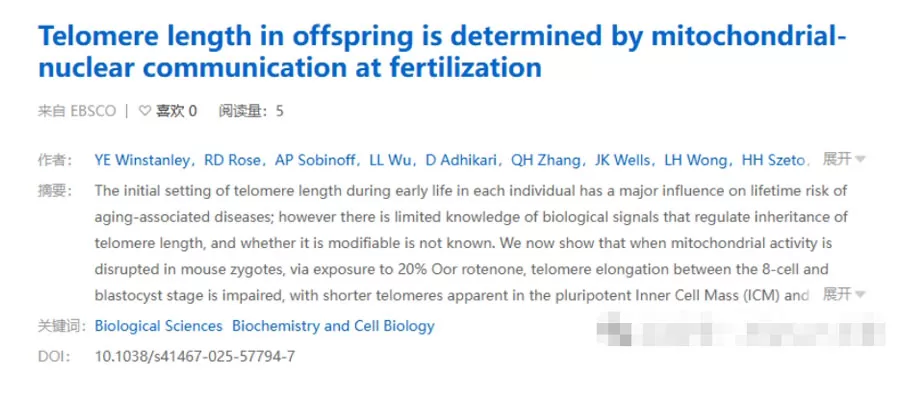
The study demonstrated that mitochondrial damage and elevated oxidative stress disrupt nuclear regulatory rhythms, interfering with genetic reprogramming processes and consequently leading to shortened telomere length in offspring.
Further experimental results revealed that administration of mitochondrial protectants (nicotinamide adenine dinucleotide, NAD⁺) could reverse telomere deficiency phenotypes.
These findings not only confirm NAD⁺'s fundamental role in supporting mitochondrial function, but more importantly, represent the first elucidation of its profound regulatory effects on telomere health.
NAD⁺: The Overlooked Coenzyme Rewriting Anti-Aging Science
Once dismissed as a mere metabolic bystander, NAD⁺ (nicotinamide adenine dinucleotide) is now revolutionizing longevity research—serving not just as the "fuel" for mitochondrial power plants, but also as the "engineer" of telomere repair.
As the energy hubs of cells, mitochondria play a pivotal role in nearly every physiological process—from heartbeat regulation and neural signaling to visual perception—all powered by ATP synthesis. A key driver of mitochondrial decline? Depleted NAD⁺ levels.
Repair Mechanism: NAD⁺ activates SIRT1, boosting mitochondrial density and ATP production efficiency.
Experimental data: A 50% increase in NAD⁺ triggers a 120% surge in mitochondrial output, with measurable improvements in muscle metabolism.
Free Radical Clearance:
Dysfunctional mitochondria leak oxidative radicals, damaging cells.
NAD⁺ suppresses oxidative stress, slashing free radical levels by over 40%.
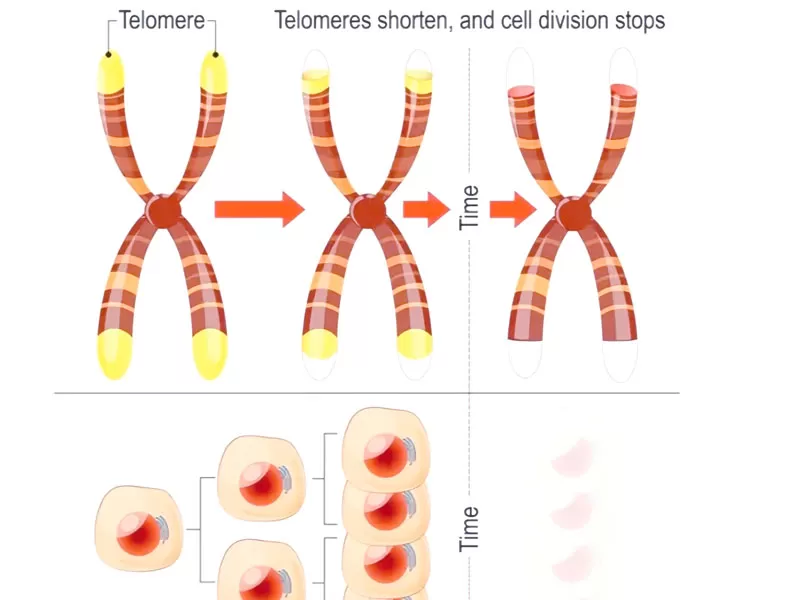
Telomerase Activation:
NAD⁺ enhances telomerase activity via SIRT6, slowing telomere attrition by 42%.
Even more remarkably, it repairs mitochondrial-induced telomere shortening, effectively reversing "inherited cellular damage."
The Genome Guardian:
Telomere erosion triggers DNA mutations, but NAD⁺-dependent PARP enzymes precisely repair damage from:
UV radiation
Environmental toxins
Other exogenous threats
IV Infusion
Bypasses digestive absorption barriers, reaching the bloodstream within 30 minutes
Ideal for individuals with mitochondrial dysfunction
Critical: Must use pharmaceutical-grade NAD+ for molecular purity and safety
NAD+-Boosting Diet
Rich in salmon, broccoli, and milk (natural NAD+ precursors)
Intermittent fasting activates NAMPT enzyme, enhancing endogenous NAD+ production
Exercise Protocol
3x weekly cardio (e.g., brisk walking) + 2x resistance training
Simultaneously stimulates mitochondrial biogenesis & telomere repair pathways
When we restore energy balance and genomic stability at the cellular level, we are fundamentally rebuilding life’s foundational order. As longevity scientist David Sinclair states:“Modulating NAD+ pathways is like resetting a cell’s youth timer.”
Action Plan for Longevity
Annual telomere testing after 40 – Track biological aging velocity
Prioritize IV NAD+ therapy – Avoid low-quality supplements; opt for medical-grade purity
Build the "Longevity Triad" – Synergize diet + exercise + sleep to slow mitochondrial & telomeric decay
Aging and chronic diseases never occur 'suddenly'—they accumulate gradually with every inefficient mitochondrion and every tiny erosion of telomeres. Age 40 isn't the starting point of 'decline,' but rather a turning point to take control of your vitality. When you learn to read your cells' language, you hold the golden key to extending your healthspan.

Professor and Ph.D. Supervisor, School of Pharmaceutical Sciences, Southern Medical University. Head of the Functional Ingredient R&D Center, Natural Field. Professor Chong Li is a distinguished researcher in the field of advanced drug delivery systems and pharmaceutical technology innovation.
.webp "How to Choose a China Coenzyme Q10 Bulk Powder Manufacturer?")

 EN
EN
 es
es  jp
jp  ko
ko  fr
fr  de
de  it
it  ru
ru  pt
pt  th
th  ar
ar  ms
ms