

For brands, importers, distributors and contract manufacturers, a COA is one of the most important documents to review before confirming a bulk order of creatine monohydrate powder. It helps buyers check whether the delivered batch matches the agreed specification, whether the test results are complete, and whether the material is suitable for commercial formulation projects.
When sourcing from a china creatine monohydrate powder supplier, buyers should not only ask for a quotation and sample. They should also request a batch-specific COA that matches the exact lot number of the material being supplied. This document can help procurement, quality and R&D teams reduce risk before sample approval, internal review or repeat purchasing.
This guide explains the key points buyers should check when reviewing a creatine monohydrate COA before placing a bulk order.
The first question buyers should ask is simple: does this COA belong to the exact batch I am buying?
A generic product sheet or old COA cannot replace a batch-specific document. For bulk purchasing, the COA should match the label on the drum, carton, bag or pallet. Buyers should check the batch number, manufacturing date, expiry date, testing date and document issue date.
Key items to confirm:
| Item | What Buyers Should Check |
| Product Name | Should clearly show creatine monohydrate |
| CAS Number | Should match CAS 6020-87-7 |
| Batch / Lot Number | Should match the delivered goods |
| Manufacturing Date | Helps confirm production timeline |
| Expiry Date | Helps review shelf life |
| COA Issue Date | Should be relevant to the batch supplied |
| Supplier / Lab Information | Should be traceable and clear |
If the batch number on the COA does not match the delivered material, buyers should ask the supplier for an updated document before moving forward.
For creatine monohydrate raw material, identity confirmation is the starting point of document review. Buyers should check whether the product name, CAS number, appearance and test method are consistent with the purchase requirement.
A qualified document should clearly show CAS 6020-87-7, which helps buyers distinguish this material from other creatine forms or finished supplement products. The COA should also match the specification sheet and sample label provided by the supplier.
Buyers can ask:
Is the product name clear?
Is CAS 6020-87-7 shown correctly?
Does the COA match the specification sheet?
Does the sample label match the COA?
Is the test method clearly stated?
This step is especially important for importers and contract manufacturers that need clear ingredient identity for internal approval.
Assay is one of the most important quality indicators on the COA. It shows whether the tested batch meets the required content range.
For B2B buyers, the key is not only whether the value looks high, but whether it matches the agreed specification and testing method. The COA should show the specification limit, actual result and conclusion clearly.
| COA Item | Buyer Question |
| Specification | What range was agreed before order confirmation? |
| Result | Does this batch fall within the accepted range? |
| Test Method | Is the method clearly listed, such as HPLC? |
| Conclusion | Does the batch pass the requirement? |
Natural Field supports this material with a 98.0%–102.0% specification range and HPLC test method for commercial sourcing projects. Buyers can use this type of information as a basis for specification comparison before bulk purchasing.
Moisture-related indicators are important because they can affect storage, packaging, transportation and production preparation.
For one-water creatine, buyers should not simply assume that “lower moisture is always better.” The result should be reviewed according to the agreed specification. If the value is outside the expected range, it may indicate drying inconsistency, humidity exposure or storage-related risk.
Before confirming a bulk order, buyers should check:
Is loss on drying or moisture listed?
Does the result meet the specification?
Are storage conditions clearly provided?
Is the packaging suitable for long-distance shipment?
Can the material remain stable during warehouse storage?
This is especially important for buyers arranging international shipment or long-term inventory.
When evaluating creatine monohydrate powder bulk orders, buyers should pay attention to impurity control. A professional COA may include related substances or process-related impurity indicators according to the agreed specification.
Common review items may include:
| Item | Why Buyers Should Review It |
| Creatinine | May reflect degradation or process-related quality issues |
| Dicyandiamide / DCD | A process-related byproduct that should be controlled |
| Dihydrotriazine / DHT | A potential impurity that may require strict review |
| Related Substances | Helps evaluate overall impurity profile |
Different markets and buyers may apply different limits, so buyers should confirm acceptance criteria with the supplier before sample approval or bulk order confirmation.
For serious B2B procurement, buyers should not only look for a general heavy metals pass statement. It is better to check whether lead, arsenic, cadmium and mercury are listed separately.
| Heavy Metal | What Buyers Should Confirm |
| Lead / Pb | Whether the value meets internal or market requirements |
| Arsenic / As | Whether the result is individually tested |
| Cadmium / Cd | Whether the batch is within the accepted range |
| Mercury / Hg | Whether the result is clearly shown |
If the destination market has specific requirements, buyers should confirm the acceptable limits before approving the batch.
Microbiological results are important for supplement ingredient and food-related raw material projects. Buyers should check whether the COA includes microbial indicators and whether the results meet the required specification.
Common items include:
Total plate count
Yeast and mold
E. coli
Salmonella
Other project-required microbial indicators
For importers and contract manufacturers, microbiological review is often part of internal quality approval before the material can enter commercial production.
For creatine monohydrate powder, particle size can affect blending, filling, powder handling and physical dispersion. Buyers should confirm whether the mesh size on the COA or specification sheet matches the intended formulation project.
| Particle Size Item | Buyer Review Focus |
| Appearance | Whether the powder matches the expected visual standard |
| Mesh Size | Whether the particle size fits production needs |
| Batch Consistency | Whether the bulk batch matches the approved sample |
| Formulation Fit | Whether the powder is suitable for the target product format |
Natural Field provides 200 mesh, 800 mesh and 1000–2000 mesh micronized options. Buyers can select the suitable grade according to their formulation, processing and handling requirements.
A COA should be complete, traceable and batch-specific. If important information is missing, buyers should ask the supplier for clarification before confirming the order.
Common red flags include:
No batch or lot number
CAS number is missing
The same COA is used for different batches
No test method is shown
Specification limits are missing
Only “Pass” is shown without actual results
Heavy metals are not listed individually
COA issue date is too old for the current shipment
No supplier, lab, signature or document traceability
Results appear exactly the same across multiple batches
These issues do not always mean the material is unacceptable, but they should trigger further document review.
A COA should not be reviewed alone. Before confirming a bulk order, buyers should request a complete document package for procurement, quality and compliance review.
Recommended documents include:
| Document | Why It Matters |
| COA | Shows batch-specific test results |
| Specification Sheet | Defines the quality standard |
| MSDS | Supports safety and handling review |
| Certificate Information | Supports supplier qualification review |
| Packaging Details | Helps confirm shipment and storage suitability |
| Storage Conditions | Supports warehouse and shelf-life management |
| Third-Party Test Report | May be required by some buyers or markets |
| Batch Traceability Information | Helps connect shipment with quality record |
This document package helps buyers move from sample evaluation to commercial purchasing more efficiently.
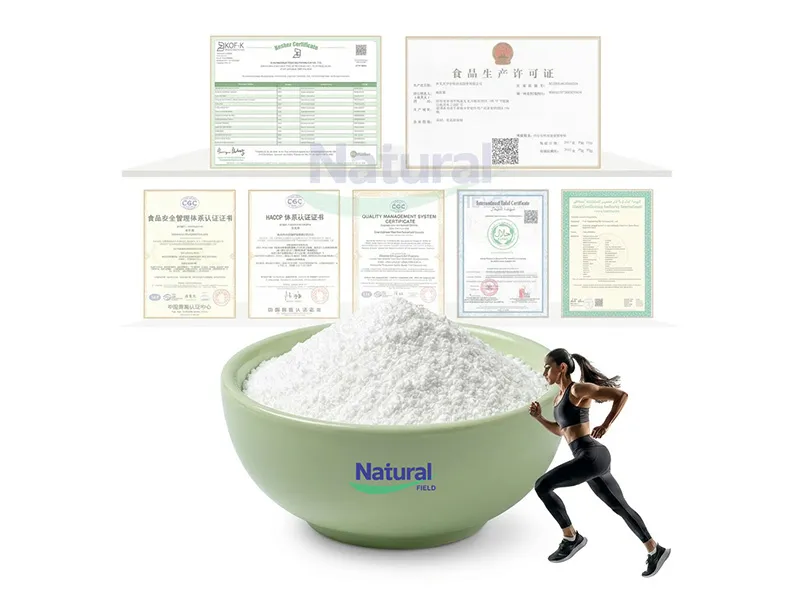
Natural Field supports global B2B customers with raw material supply, specification communication, COA document support, sample evaluation, packaging discussion and commercial order coordination.
For creatine monohydrate projects, Natural Field provides CAS 6020-87-7, 98.0%–102.0% specification, HPLC test method, white powder appearance, multiple mesh options and certificate information. Its production capacity also supports regular bulk orders and long-term purchasing programs.
| Buyer Need | Natural Field Support |
| Product Identity Review | CAS number, specification and product information |
| COA Communication | Batch-related document support |
| Specification Review | Assay, test method and particle size discussion |
| Sample Evaluation | Sample support based on project requirements |
| Bulk Supply | Commercial order and wholesale cooperation support |
| Export Projects | Packaging and international shipment communication |
| Long-Term Cooperation | Repeat-order communication for B2B customers |
This support helps brands, importers, distributors and contract manufacturers review the material more clearly before bulk purchasing.
| Review Area | What to Confirm |
| Identity | Product name and CAS number |
| Traceability | Batch number, manufacturing date and expiry date |
| Assay | Result matches the agreed specification |
| Test Method | Method is clearly listed |
| Moisture | Result meets the required range |
| Impurities | Creatinine, DCD, DHT and related substances are reviewed |
| Heavy Metals | Pb, As, Cd and Hg are listed separately |
| Microbiology | Results meet project requirements |
| Particle Size | Mesh size matches formulation needs |
| Documents | COA, MSDS, specification sheet and certificates are available |
| Batch Match | COA matches the delivered lot |
| Supplier Response | Supplier can explain results and support follow-up questions |
Buyers should first check whether the COA matches the exact batch being purchased, including product name, CAS number, batch number, manufacturing date and expiry date.
CAS 6020-87-7 helps confirm the raw material identity during specification review, COA comparison and procurement communication.
A generic COA can provide basic information, but it should not replace a batch-specific COA for sample approval or bulk purchasing.
Buyers may review creatinine, DCD, DHT and related substances according to the agreed specification, destination-market requirements and internal quality standards.
Separate results for lead, arsenic, cadmium and mercury provide clearer quality information than a general “heavy metals pass” statement.
Yes. Natural Field supports B2B buyers with raw material supply, specification communication, COA support, sample evaluation, packaging discussion and order coordination."
Explore more Natural Field articles related to creatine monohydrate powder, sports nutrition ingredients and B2B raw material sourcing:
Creatine Monohydrate: Beyond Muscle Gain — The Science-Backed Brain Health Nutrient
Selecting Quality Creatine Monohydrate Powder: A Professional Buying Guide
The Safety of Creatine Monohydrate: A Supplement to Use with Confidence
Creatine Monohydrate: A Must-Have Supplement for Athletes and Fitness Enthusiasts
Creatine Is Going Mainstream: From Niche Sports Supplement to Everyday Functional Food Ingredient

Professor and Ph.D. Supervisor, School of Pharmaceutical Sciences, Southern Medical University. Head of the Functional Ingredient R&D Center, Natural Field. Professor Chong Li is a distinguished researcher in the field of advanced drug delivery systems and pharmaceutical technology innovation.
 EN
EN
 es
es  jp
jp  ko
ko  fr
fr  de
de  it
it  ru
ru  pt
pt  th
th  ar
ar  ms
ms 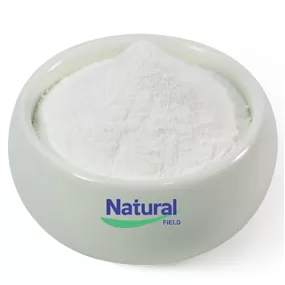

.webp "How to Choose a China Coenzyme Q10 Bulk Powder Manufacturer?")
