
In today’s nutraceutical and functional ingredient industry, one of the biggest challenges is not just identifying effective compounds, but ensuring they are stable, bioavailable, and efficiently absorbed after ingestion.
Many high-value nutrients, such as antioxidants, vitamins, and bioactive compounds, can degrade during processing, storage, or digestion, which limits their effectiveness in finished products.
Liposomal encapsulation technology offers a practical solution to this challenge. By using phospholipid-based vesicles to encapsulate active ingredients, this technology helps protect sensitive compounds and improve their delivery within the body.
Liposomal encapsulation refers to the process of enclosing active ingredients within microscopic lipid vesicles called liposomes. These structures consist of one or more phospholipid bilayers surrounding an aqueous core, closely resembling natural biological membranes. This similarity enhances compatibility and supports efficient nutrient delivery in nutraceutical applications.
A liposome is primarily composed of phospholipids, amphiphilic molecules that possess a hydrophilic (water-loving) head and a hydrophobic (water-fearing) tail. When placed in an aqueous environment, these phospholipids spontaneously arrange themselves into a bilayer. The tails point inward, away from the water, while the heads face the internal and external aqueous phases.
Hydrophilic Cargo: Water-soluble substances (like Vitamin C or certain peptides) are trapped within the aqueous core.
Hydrophobic Cargo: Fat-soluble substances (like Vitamin D3, CoQ10, or Curcumin) are embedded within the lipid bilayer itself.
Liposomes are generally categorized by their physical properties:
Unilamellar Vesicles: These have a single phospholipid bilayer. They are further divided into Small Unilamellar Vesicles (SUV, 20–100 nm) and Large Unilamellar Vesicles (LUV, >100 nm).
Multilamellar Vesicles (MLV): These consist of several concentric layers, similar to an onion. They are often used for the sustained release of drugs.
For most supplement manufacturers, the focus is on stability, scalability and consistency in production. Natural Field optimizes liposomal structures for different applications, ensuring that formulations are not only effective but also production-ready.
The success of a liposomal formulation is largely determined by its encapsulation efficiency. Encapsulation efficiency is the percentage of the initial active ingredient that is successfully trapped inside or within the membrane of the liposome, rather than remaining free in the surrounding solution. High encapsulation efficiency is critical for cost-effectiveness, potency, and reducing the side effects of unencapsulated drugs.
Before measuring the concentration, the encapsulated drug must be separated from the non-encapsulated drug.
Ultracentrifugation: This is one of the most common methods. The liposomes, being larger and denser, are sedimented into a pellet at high speeds, leaving the free drug in the supernatant.
Dialysis: The liposomal suspension is placed in a dialysis bag with a specific molecular weight cut-off. The free drug molecules diffuse out into the surrounding buffer, while the larger liposomes remain inside.
Size Exclusion Chromatography: Using a column filled with porous beads, like Sephadex, the liposomes pass through quickly, while the smaller free drug molecules get caught in the pores and elute later.
Once separated, the amount of drug is measured using analytical tools:
High-Performance Liquid Chromatography (HPLC): The gold standard for precision. It can accurately quantify both the encapsulated and free drug concentrations.
UV-Vis Spectroscopy: A simpler method used for drugs that have a specific light-absorption profile.
Fluorescence Spectroscopy: Used for fluorescently labeled markers or drugs that naturally fluoresce.
The efficiency is influenced by the lipid-to-drug ratio, the method of preparation (e.g., thin-film hydration, sonication, or microfluidization), and the charge of the lipids. For instance, using negatively charged lipids can increase the encapsulation efficiency of positively charged molecules through electrostatic attraction.
In the commercial landscape, companies like Natural Field have specialized in bringing pharmaceutical-grade liposomal technology to the nutraceutical market. The approach focuses on overcoming the two biggest hurdles in the industry: stability and bioavailability.
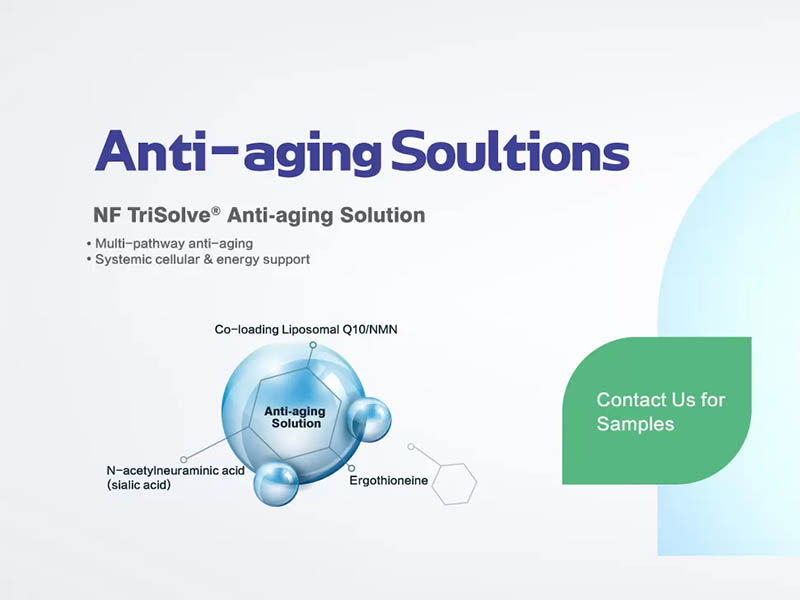
Natural Field’s liposomal ingredients utilize high-quality phospholipids to ensure that active compounds like NMN, Glutathione, and Coenzyme Q10 are not only encapsulated but remain stable throughout their shelf life.
The technology emphasizes:
Strict Particle Size Control: Ensuring vesicles are small enough for optimal cellular uptake.
High Encapsulation Rates: Maximizing the payload per dose.
Enhanced Stability: Protecting sensitive molecules from oxidation and stomach acid.
Natural Field provides a platform bridging advanced delivery technology with scalable nutraceutical manufacturing. The process ensures that the active ingredients survive the harsh acidic environment of the stomach and reach the small intestine, where liposomes can fuse directly with intestinal cells to enter the bloodstream.
Liposomal technology is widely used to improve the performance of functional ingredients.
Examples include:
Liposomal NMN: helps protect NAD+ precursors during digestion
Liposomal Glutathione: improves stability against enzymatic breakdown
Liposomal CoQ10: enhances dispersion of fat-soluble compounds
Liposomal Curcumin: improves formulation compatibility and absorption
Natural Field provides ready-to-use liposomal raw materials for these high-demand categories, enabling faster product development.
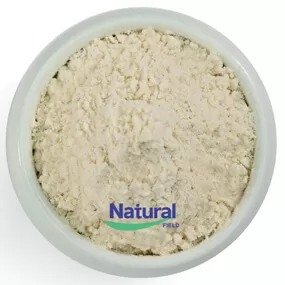
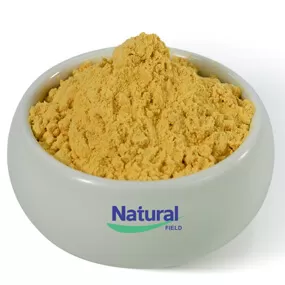
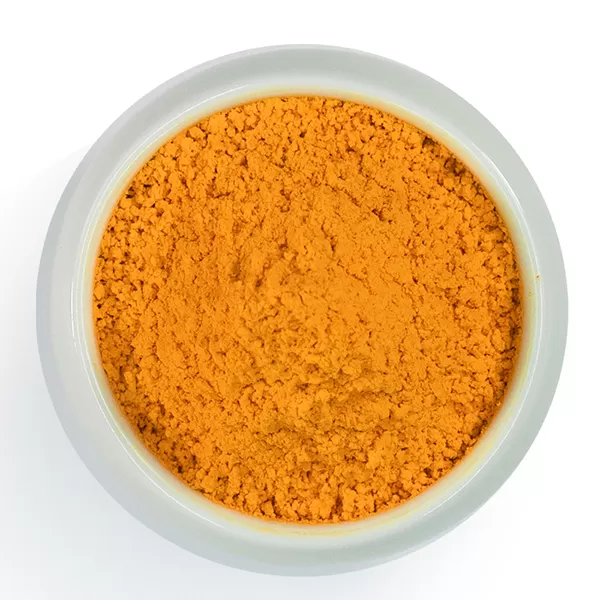
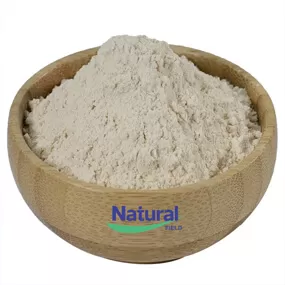
Liposomal powders are increasingly used in functional drinks, nutritional sachets and powder blends. Their improved dispersibility and stability make them suitable for large-scale food applications.
For premium nutraceutical brands, liposomal delivery enables:
Lower dosage with improved performance
Differentiated product positioning
Better compatibility with multi-ingredient formulas
While liposomal technology offers clear advantages, there are still practical considerations in nutraceutical applications:
Stability depends on phospholipid quality and processing methods
Production requires precise control to maintain encapsulation integrity
Cost is higher than conventional ingredient forms
However, ongoing innovation, especially in powder-based liposomal systems, is making the technology more scalable and commercially viable for the supplement industry.
Future development is expected to focus on:
Improved stability for long shelf life
Better integration into complex formulations
Cost optimization for broader adoption
Liposomal encapsulation technology represents a significant advancement in the delivery of nutraceutical ingredients. By improving stability, protecting sensitive compounds, and enhancing potential bioavailability, liposomes help bridge the gap between ingredient formulation and real-world effectiveness. This technology enables the development of more efficient, stable, and differentiated supplement products for manufacturers.
With expertise in liposomal powder production, Natural Field provides scalable, high-quality solutions that support modern nutraceutical innovation, ensuring that functional ingredients perform as intended from formulation to consumption.

Professor and Ph.D. Supervisor, School of Pharmaceutical Sciences, Southern Medical University. Head of the Functional Ingredient R&D Center, Natural Field. Professor Chong Li is a distinguished researcher in the field of advanced drug delivery systems and pharmaceutical technology innovation.
 EN
EN
 es
es  jp
jp  ko
ko  fr
fr  de
de  it
it  ru
ru  pt
pt  th
th  ar
ar  ms
ms