
According to the official statistics from the World Health Organization (WHO), 17.9 million people worldwide died from cardiovascular diseases in 2019, accounting for 32% of the global total deaths that year; among these, over 75% of cardiovascular disease deaths occurred in low- and middle-income countries.
Meanwhile, the China Cardiovascular Health and Disease Report 2022 indicates that the number of cardiovascular disease patients in China had reached 330 million by 2020, and 2 out of every 5 deaths were related to cardiovascular diseases.
In fact, as early as 1961, the American Heart Association (AHA) advocated protecting cardiovascular health by improving dietary patterns. In recent years, with the growing health awareness among consumers, more and more people have begun to seek intervention and maintenance of cardiovascular health through nutritional supplements.

In the cardiovascular nutrition market, Coenzyme Q10 (CoQ10) is a recognized star ingredient. According to data from Magic Mirror Insight, between January 2024 and March 2025, the total sales of cardiovascular nutrition products on three major online platforms (Tmall, JD.com, and Douyin) reached 7.74 billion yuan, representing an 18.4% year-on-year increase; sales volume hit 30.381 million units, with a high year-on-year growth rate of 34.1%. Among these products, Coenzyme Q10 (accounting for 41.4%) and fish oil (26.5%) together hold nearly 70% of the market share. In terms of consumption trends, the audience for Coenzyme Q10 is gradually getting younger, especially favored by young people with sub-health conditions.
Coenzyme Q10 (abbreviated as CoQ10), also known as ubiquinone or decenyl quinone, is a compound with both medical and nutritional health value. It possesses functions such as antioxidant activity, activating cellular respiration, and enhancing human immunity, and is widely used in scenarios like cardiovascular health maintenance, anti-aging, and energy supplementation. In June 2021, the Catalogue of Five Health Food Raw Materials Including Coenzyme Q10 was officially implemented, launching the filing work for five health food raw materials including Coenzyme Q10 nationwide. Currently, Coenzyme Q10 can apply for two health functions: "antioxidant" and "enhancing immunity". In addition, the Chinese Expert Consensus on the Diagnosis and Treatment of Adult Fulminant Myocarditis clearly states that all patients with fulminant myocarditis should receive general symptomatic and supportive treatment, and drugs such as creatine phosphate and Coenzyme Q10 can be used to improve myocardial energy metabolism.
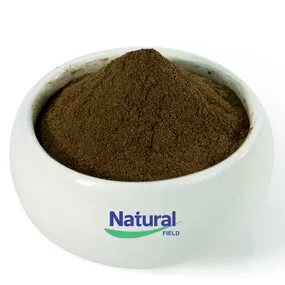
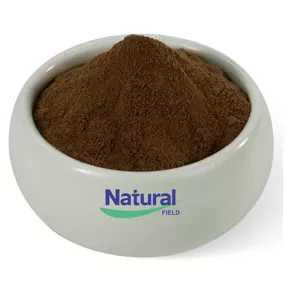
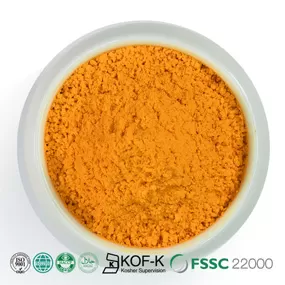
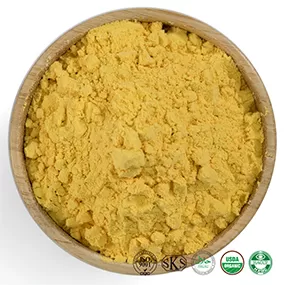
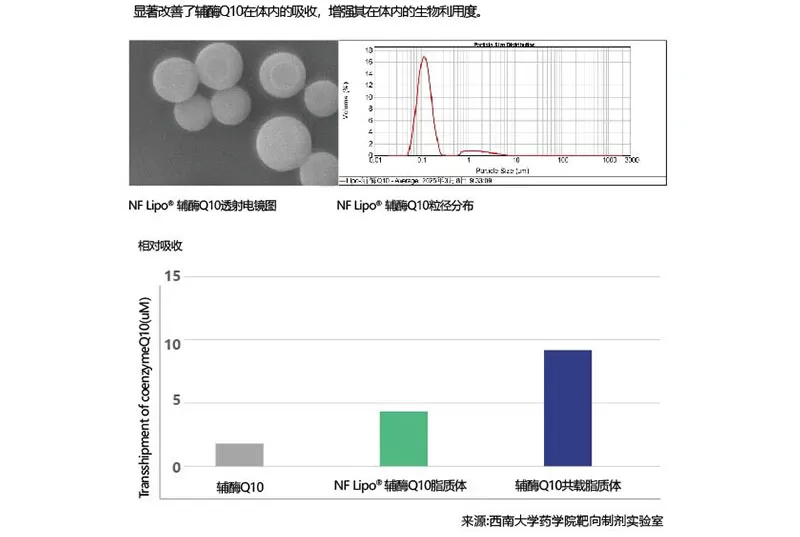
Despite its significant health value, the application of Coenzyme Q10 has long been limited by low bioavailability and slow absorption. After over a decade of continuous R&D investment, Tianfeng Biology has successfully developed Coenzyme Q10 liposomes and co-loaded Coenzyme Q10 liposomes, which effectively improve the in vivo absorption efficiency and bioavailability of Coenzyme Q10, providing a new solution for the development of related products.
The core innovation of NFLipo® co-loaded CoQ10 liposomes lies in the use of rare ginsenosides as membrane materials, which greatly enhance the stability and biocompatibility of liposomes. This design not only gives full play to the antioxidant effect of Coenzyme Q10 but also combines the unique immunomodulatory function of rare ginsenosides, achieving the dual value of "synergistic efficacy". Traditional ordinary liposomes are tiny vesicles composed of lecithin and cholesterol, which can encapsulate fat-soluble or water-soluble substances and serve as ideal delivery carriers. However, they have shortcomings such as simple formulation, single efficacy, and limited drug-loading capacity, making them more suitable for low-dose drugs or health foods. Rare ginsenosides can not only improve the delivery efficiency of Coenzyme Q10 but also further enhance its bioavailability, endowing co-loaded Coenzyme Q10 liposomes with broad application prospects in the fields of nutritional health, medicine, and cosmetics.
Experimental data confirms this technical advantage: animal experiments show that the bioavailability of Coenzyme Q10 encapsulated in co-loaded liposomes is increased by approximately 3 times compared with traditional products; in transport experiments using Caco-2 cell models to simulate intestinal absorption, its transport rate is 7.86 times higher than that of traditional forms. This indicates that co-loaded liposome technology significantly optimizes the in vivo absorption effect of Coenzyme Q10 and greatly improves its bioavailability.
To verify the cardioprotective effect of co-loaded CoQ10 liposomes, researchers from the Targeted Drug Delivery System Laboratory of the College of Pharmaceutical Sciences, Southwest University, used C57BL/6 mice as subjects and established an animal model simulating human heart injury by injecting isoprenaline (ISO) to induce myocardial damage. The mice were randomly divided into several groups, including the control group, ISO model group, ordinary liposome group, saponin liposome group, CoQ10-ginsenoside co-loaded liposome group, and CoQ10 soft capsule group. Multi-dimensional techniques such as echocardiography, serum marker detection, and oxidative stress index determination were combined to comprehensively evaluate the cardioprotective effects of each group.
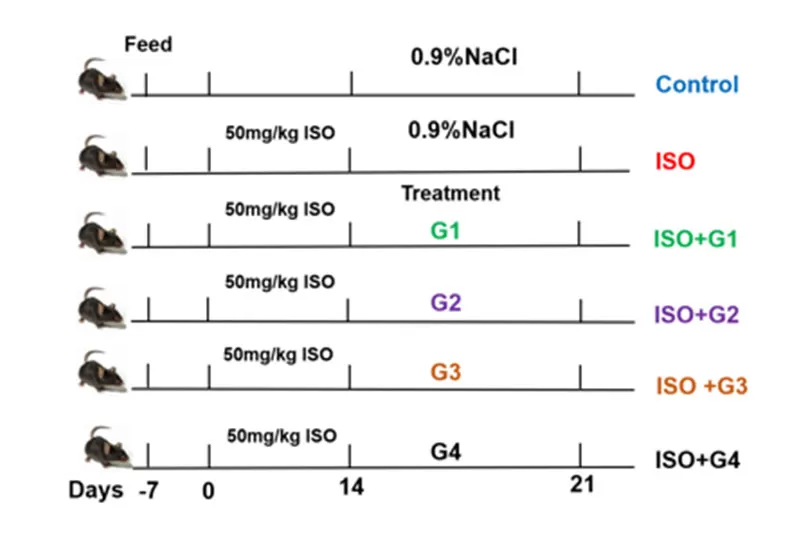
The experimental results showed that: the cardiac function of mice in the ISO model group was significantly impaired, with both left ventricular ejection fraction (EF) and fractional shortening (FS) decreasing markedly; however, after intervention with CoQ10-ginsenoside co-loaded liposomes, these two core cardiac function indicators were significantly improved, with effects superior to those of commercially available CoQ10 soft capsules. This indicates that the co-loaded liposome preparation not only can effectively reverse cardiac function damage but also provide more durable and significant protective effects.
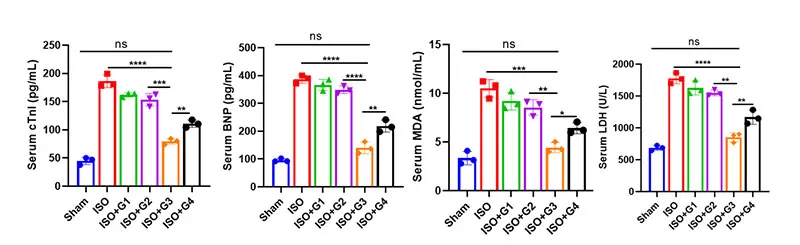
Further serum analysis revealed that the levels of ISO-induced myocardial injury markers—cardiac troponin I (cTnI) and B-type natriuretic peptide (BNP)—were substantially elevated, while CoQ10 co-loaded liposomes could effectively inhibit the increase in the levels of these markers, confirming its clear efficacy in improving myocardial damage. In addition, the detection results of oxidative stress markers such as malondialdehyde (MDA) and lactate dehydrogenase (LDH) showed that the co-loaded liposome preparation could also significantly alleviate the oxidative stress state and reduce cell membrane damage, further verifying its cardioprotective value.
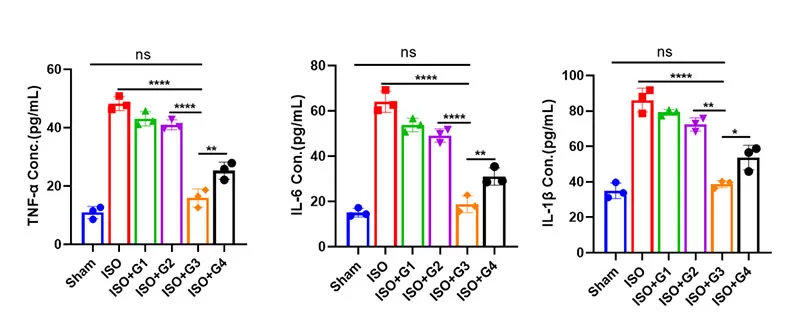
The experiment also explored the regulatory effect of CoQ10 co-loaded liposomes on cardiac inflammatory responses. The study found that the levels of pro-inflammatory cytokines such as IL-6, IL-1β, and TNF-α in the serum of mice in the ISO model group increased significantly; in contrast, CoQ10 co-loaded liposomes could significantly reduce the concentrations of these pro-inflammatory factors, demonstrating excellent anti-inflammatory ability. In particular, compared with commercially available CoQ10 soft capsules, the co-loaded liposome preparation exhibited more prominent anti-inflammatory efficacy in inhibiting inflammatory responses.
Co-loaded CoQ10 liposomes not only demonstrate outstanding cardioprotective efficacy but also possess multiple advantages of anti-inflammation and antioxidant properties, with their overall performance significantly superior to traditional CoQ10 soft capsules. As a professional supplier of co-loaded CoQ10 liposome raw materials, Natural Field is capable of providing customers with more efficient and stable nutritional supplement solutions.
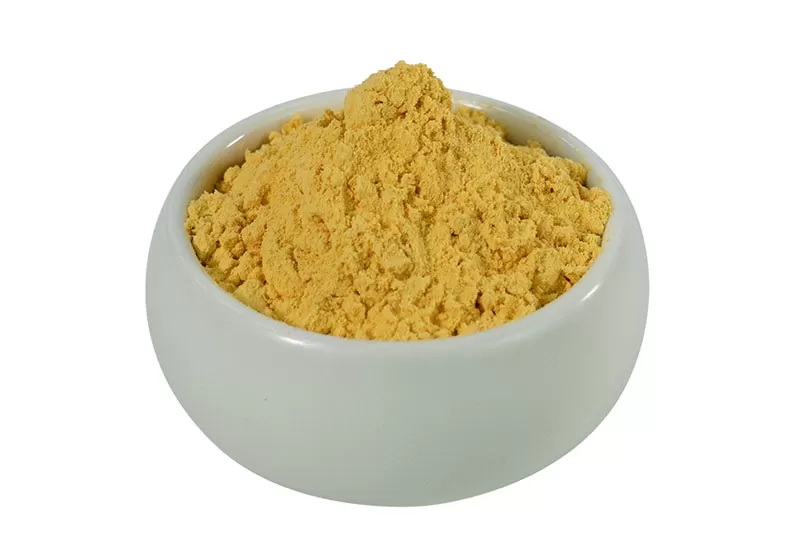
Natural Field firmly believes that with the continuous advancement of scientific research, co-loaded CoQ10 liposomes are expected to become one of the core choices in the field of future cardiac health care. Along with the continuous innovation in the health sector, Natural Field looks forward to cooperating with partners from all walks of life to jointly promote the application expansion of CoQ10 in the nutritional health field. Whether for research institutions, pharmaceutical companies, or relevant practitioners, choosing Natural Field’s high-quality co-loaded Coenzyme Q10 liposome raw materials will inject core competitiveness into products, thereby delivering more prominent health value.

Professor and Ph.D. Supervisor, School of Pharmaceutical Sciences, Southern Medical University. Head of the Functional Ingredient R&D Center, Natural Field. Professor Chong Li is a distinguished researcher in the field of advanced drug delivery systems and pharmaceutical technology innovation.
 EN
EN
 es
es  jp
jp  ko
ko  fr
fr  de
de  it
it  ru
ru  pt
pt  th
th  ar
ar  ms
ms